






الطريق إلى النجاح: تحقيق الأهداف النهائية لأي كلمة عند تحديدها
Price range: $29.59 through $49.59

الطريق إلى النجاح: تحقيق الأهداف النهائية لأي كلمة عند تحديدها
Price range: $29.59 through $49.59
الطريق إلى النجاح: تحقيق الأهداف النهائية لأي كلمة عند تحديدها
Price range: $29.59 through $49.59
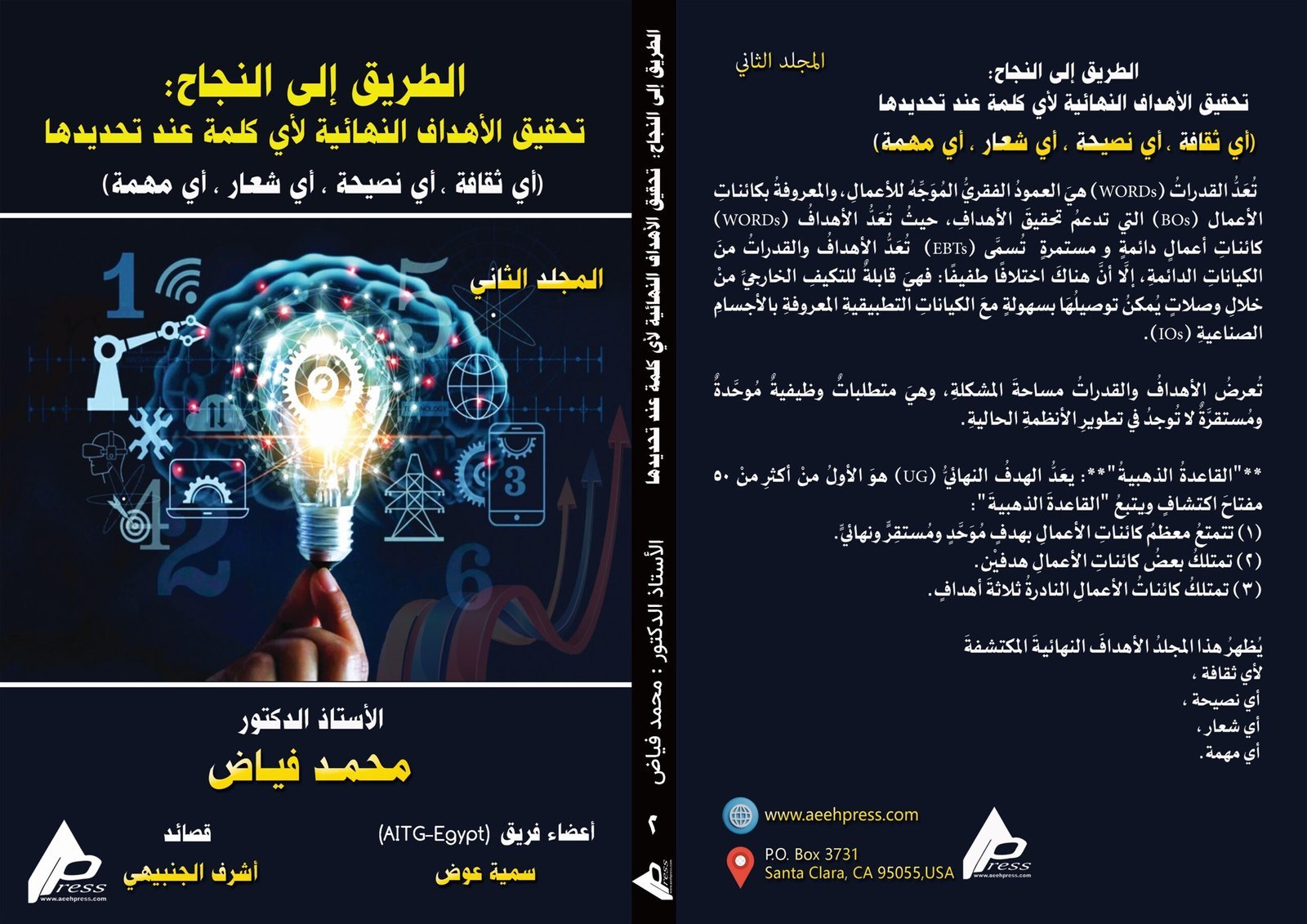
Capabilities (WORDs) are the business-centric workhorses called Business Objects (BOs) that support the realization of fulfillment of a goal where goals (WORDs) are Enduring Business-centric Themes called (EBTs). Goals and capabilities are enduring artifacts, but with a minor difference: They are externally adaptable via hooks that are easily connected to the application objects called Industrial Objects (IOs) The Goals and Capabilities present the problem space, which are stable and unified functional requirements that do not exist in current system development. The “Golden Rule”: Ultimate Goal (UG) is considered to be the first of more than 50 discovery keys and follows the “golden rule”: (1) Most BOs have a unified, Stable, and final goal. (2) A few BOs have two goals. (3) Rare BOs have three goals. This volume shows that the ultimate goals that are discovered of: Any Culture, Any Advice, Any Slogan, and Any Task.
| BOOK |
Hardcover ,Paperback ,Kindle |
|---|
Description
Product details
- Publisher : AEEH PRESS INC (April 13, 2024)
- Language : English
- Paperback : 255 pages
- ISBN: 978-1-964282-20-6
- Item Weight : 1.14 pounds
- Dimensions : 6 x 0.68 x 9 inches
- AITG Egypt Members Somya Awad
- Poems Ashraf Algenbihy
- Illustrations by Mahmoud Asaad
- Calligrapher and language editor Kamal Saad
Book flyers
Copyright © 2025 AEEH PRESS INC
All Rights Reserved. No part of this publication may be reproduced, stored in a retrieval system, or transmitted, in any form or by any means, electronic, mechanical, photocopying, recording, or otherwise, without the written permission of the author.
Reviews (0)
Shipping & Delivery


Related products
Fayad’s The Art of Abstraction (FAA)
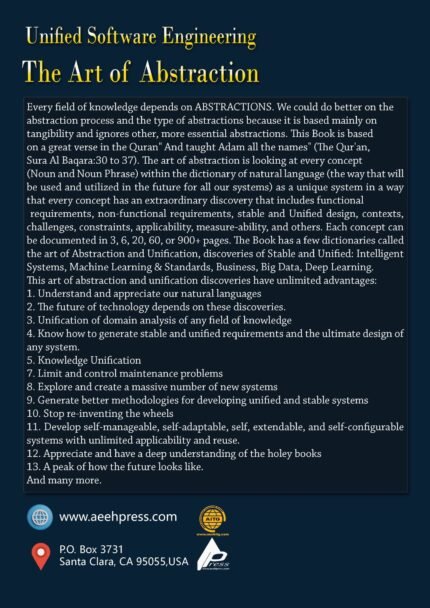
Every field of knowledge depends on ABSTRACTIONS. We could do better on the abstraction process and the type of abstractions because it is based mainly on tangibility and ignores other, more essential abstractions. This Book is based on a great verse in the Quran" And taught Adam all the names" (The Qur'an, Sura Al Baqara:30 to 37). The art of abstraction is looking at every concept (Noun and Noun Phrase) within the dictionary of natural language (the way that will be used and utilized in the future for all our systems) as a unique system in a way that every concept has an extraordinary discovery that includes functional requirements, non-functional requirements, stable and Unified design, contexts, challenges, constraints, applicability, measure-ability, and others. Each concept can be documented in 3, 6, 20, 60, or 900+ pages. The Book has a few dictionaries called the art of Abstraction and Unification, discoveries of Stable and Unified: Intelligent Systems, Machine Learning & Standards, Business, Big Data, Deep Learning. This art of abstraction and unification discoveries have unlimited advantages: 1. Understand and appreciate our natural languages 2. The future of technology depends on these discoveries. 3. Unification of domain analysis of any field of knowledge 4. Know how to generate stable and unified requirements and the ultimate design of any system. 5. Knowledge Unification 7. Limit and control maintenance problems 8. Explore and create a massive number of new systems 9. Generate better methodologies for developing unified and stable systems 10. Stop re-inventing the wheels 11. Develop self-manageable, self-adaptable, self, extendable, and self-configurable systems with unlimited applicability and reuse. 12. Appreciate and have a deep understanding of the holey books 13. A peak of how the future looks like. And many more.

Knowledge Map for Unified Domain Analysis (KM-UDA) Volume 02 – Software Lifecycle Stages
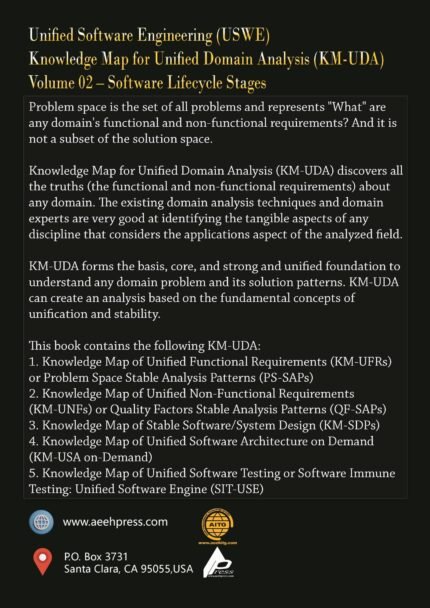
Problem space is the set of all problems and represents "What" are any domain's functional and non-functional requirements? And it is not a subset of the solution space. Knowledge Map for Unified Domain Analysis (KM-UDA) discovers all the truths (the functional and non-functional requirements) about any domain. The existing domain analysis techniques and domain experts are very good at identifying the tangible aspects of any discipline that considers the applications aspect of the analyzed field. KM-UDA forms the basis, core, and strong and unified foundation to understand any domain problem and its solution patterns. KM-UDA can create an analysis based on the fundamental concepts of unification and stability. This book contains the following KM-UDA: 1. Knowledge Map of Unified Functional Requirements (KM-UFRs) or Problem Space Stable Analysis Patterns (PS-SAPs) 2. Knowledge Map of Unified Non-Functional Requirements (KM-UNFs) or Quality Factors Stable Analysis Patterns (QF-SAPs) 3. Knowledge Map of Stable Software/System Design (KM-SDPs) 4. Knowledge Map of Unified Software Architecture on Demand (KM-USA on-Demand) 5. Knowledge Map of Unified Software Testing or Software Immune Testing: Unified Software Engine (SIT-USE)
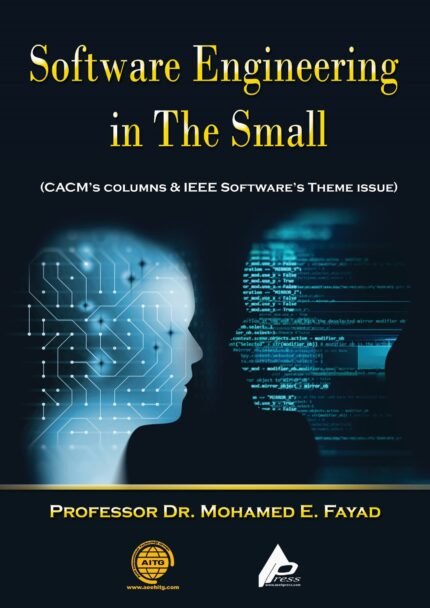
Software Engineering in The Small.
Over the past many years, software has become a vital component of almost every business and national economy. Virtually any product or service has become software enabled. As a result, organizations’ competitiveness largely depends on their ability to use the software as a competitive weapon. What makes the competitive landscape more complex is the kind of pressures organizations face in terms of time to market, new features, cost, and, of course, quality and reliability. Furthermore, organizations are finding it increasingly challenging to operate as convergence, discontinuity, and economic boundarylessness lead to the birth of a new breed of global customers. And any organization’s survival—let alone success—is therefore clearly becoming dependent on an ability to understand the characteristics of such international customers and serve them accordingly. In their quest for software excellence, organizations must rely increasingly on software engineering techniques and methodologies and rely on and refine their traditional business strategies. This book: 1. Extends four well-known CACM thinking (O=Object) Objective Software Engineering in the Small columns: I. Software Engineering in the Small II. Problems with Scalability III. Management in the Small IV. Process Improvement in the Small 2. Discuss the September/October 2000, IEEE Software Introduction: Software Engineering in the Small theme Issue 3. Comments and explains responses, 4. Answers many questions.
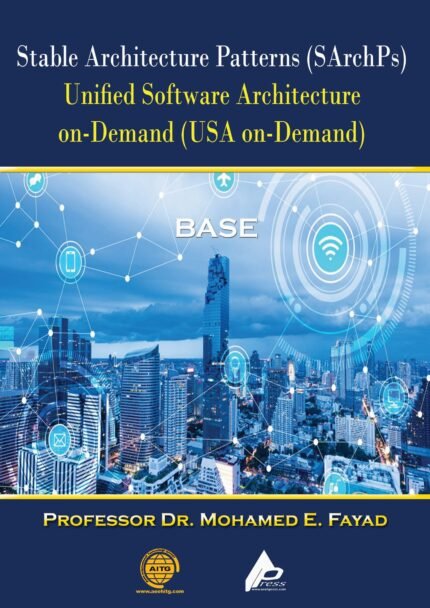
Stable Architecture Patterns (SArchPs) Unified Software Architecture on-Demand (USA on-Demand)
USA on-Demand proposes future trends in "Software Architectures that solve the mentioned challenges above and Look Seriously at "Unified Software Architecture on-Demand (F-USA on-Demand) ." The rapid growth of technology, coupled with the tightened development time and production cost constraints, have imposed tremendous pressure and an intense desire for software enterprises to create new and innovative designs which could respond to rapidly changing business and operating environments. Therefore, enterprises must invest in building stable architectures based on conceptual knowledge more than application context. Any system based on a stable architecture is built in a way that captures the enduring goals that the software is supposed to meet. We refer to these emerging trends of architectures as Architectures on Demand as they are unlimited reusable, adaptable, customizable, extensible, Customizability, self-configurable, self-manageable, and unlimited applicability, according to the future requirements and changes in the operating environments. Adaptability refers to how software system architecture can accommodate changes in its environment constrained by the hardware and software. Customizability refers to the ability of the architecture to be managed and customized by an agent, its users, benefiting applications, and others. Extensibility means that the architecture includes mechanisms for expanding/enhancing the system with new capabilities without making major changes to the architecture and the underlying infrastructure. Good architecture has excellent design principles and guidelines to ensure such architecture's excellency. Self-configurable and self-manageable architectures refer to the architectures of systems that can manage and "self-heal" their properties dynamically at the level of components, connectors, and the underlying infrastructure. The crosscutting concern for all these properties is that dependability should continue to be maintained and evolve the adaptation of the architectures on demand.
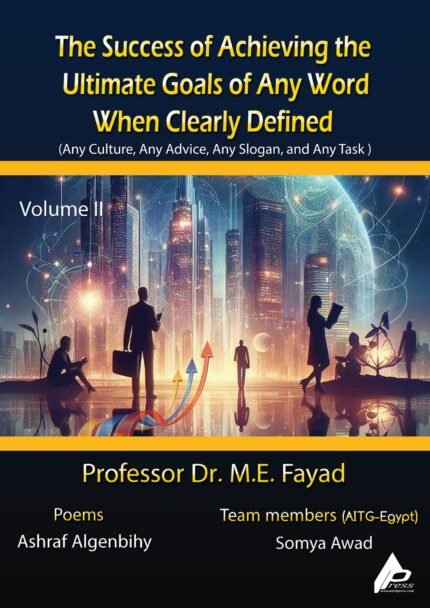
The Success of Achieving the Ultimate Goals of Any Word When Clearly Defined (Any Culture, Any Advice, Any Slogan, and Any Task )
Capabilities (WORDs) are the business-centric workhorses called Business Objects (BOs) that support the realization of fulfillment of a goal where goals (WORDs) are Enduring Business-centric Themes called (EBTs). Goals and capabilities are enduring artifacts, but with a minor difference: They are externally adaptable via hooks that are easily connected to the application objects called Industrial Objects (IOs) The Goals and Capabilities present the problem space, which are stable and unified functional requirements that do not exist in current system development. The “Golden Rule”: Ultimate Goal (UG) is considered to be the first of more than 50 discovery keys and follows the “golden rule”: (1) Most BOs have a unified, Stable, and final goal. (2) A few BOs have two goals. (3) Rare BOs have three goals. This volume shows that the ultimate goals that are discovered of: Any Culture, Any Advice, Any Slogan, and Any Task.
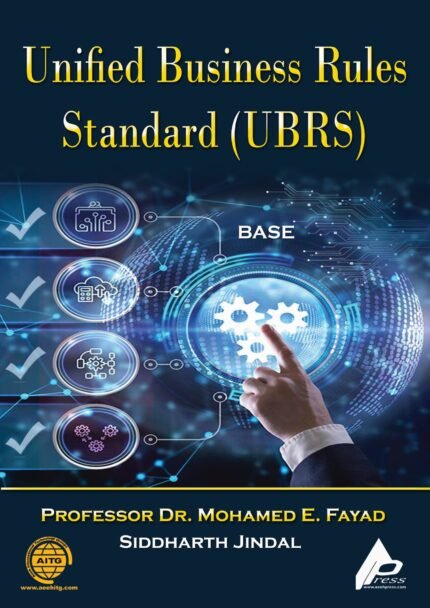
Unified Business Rules Standard (UBRS)
The current business environment's ever-changing market dynamics, like evolving user needs, faults, intrusions, etc., require constant updates to system behavior and resource availability. These changes, however, should be performed without significantly affecting the application structure, thus allowing the system to effortlessly optimize and tune itself at runtime to handle/manage any issues. Business rules are an effective tool to provide flexibility and control for rapidly deploying changes across business operations. However, most organizations still need help to explicitly define or model business rules, primarily because they lack a global and widely acceptable set of standards. Furthermore, current business rule standards are not flexible and adaptable for defining rules that can apply to any other application except the ones they are designed for. Such problem dependencies in traditional standards make them challenging to evolve and, hence, significantly limit their use. The Unified Business Rule Standard (UBRS) eliminates these dependencies by focusing on the core knowledge of the domain. It effectively means the changes can be carried out to the problem-specific components without affecting the core functionality. In other words, updating the business logic can occur without recompiling the application code.

الطريق إلى النجاح: تحقيق الأهداف النهائية لأي كلمة عند تحديدها
Capabilities (WORDs) are the business-centric workhorses called Business Objects (BOs) that support the realization of fulfillment of a goal where goals (WORDs) are Enduring Business-centric Themes called (EBTs). Goals and capabilities are enduring artifacts, but with a minor difference: They are externally adaptable via hooks that are easily connected to the application objects called Industrial Objects (IOs) The Goals and Capabilities present the problem space, which are stable and unified functional requirements that do not exist in current system development. The “Golden Rule”: Ultimate Goal (UG) is considered to be the first of more than 50 discovery keys and follows the “golden rule”: (1) Most BOs have a unified, Stable, and final goal. (2) A few BOs have two goals. (3) Rare BOs have three goals. This volume shows that the ultimate goals that are discovered of: Any Project, Any Proposal, Any Strategy, and Any Debate.


Reviews
There are no reviews yet.