

Fayad’s The Art of Abstraction (FAA)
Price range: $179.99 through $499.99

Knowledge Map for Unified Domain Analysis (KM-UDA) Volume 01 – Intelligence Technologies
Price range: $99.99 through $199.99
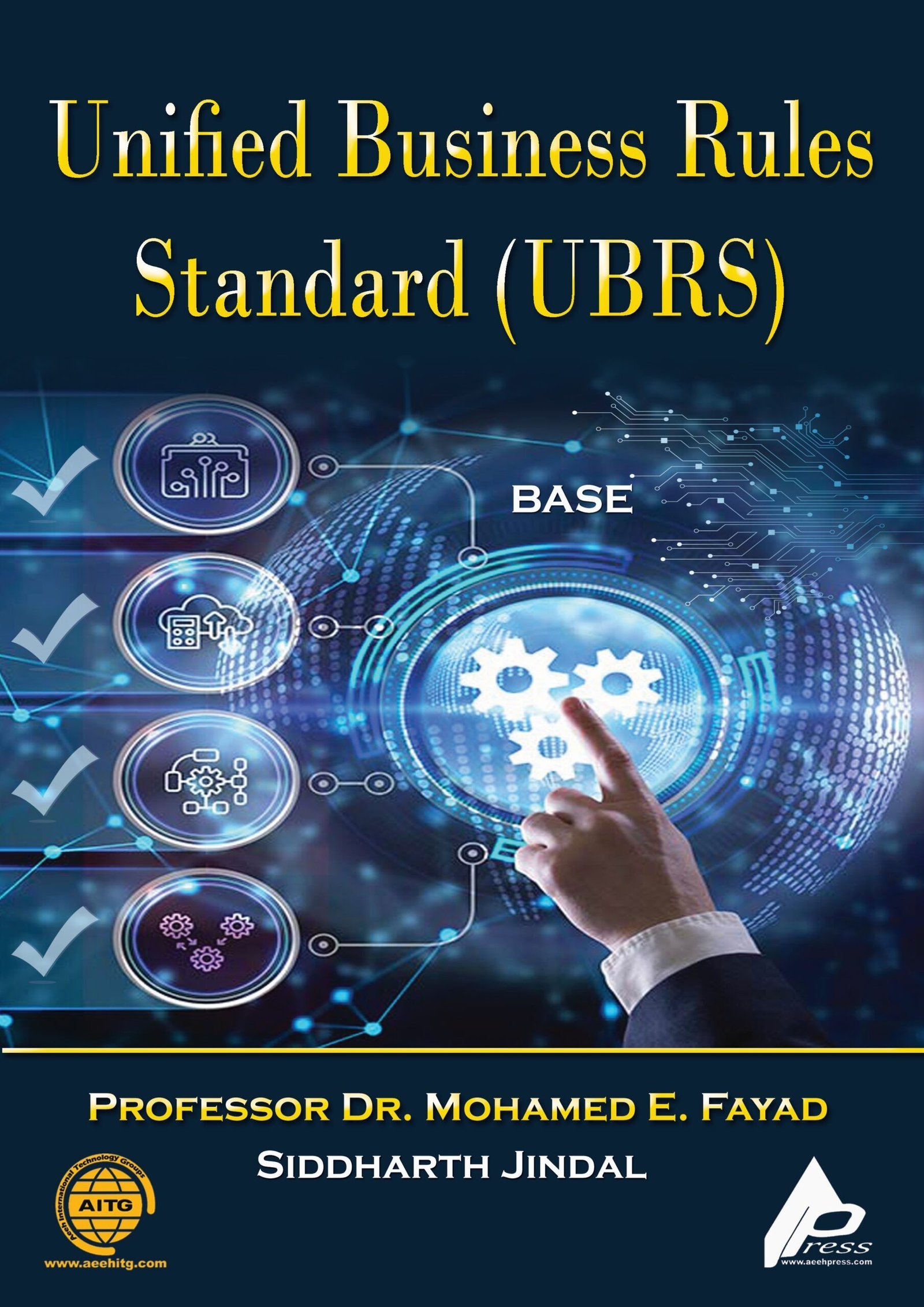
Unified Business Rules Standard (UBRS)
Price range: $179.99 through $499.99
The current business environment’s ever-changing market dynamics, like evolving user needs, faults, intrusions, etc., require constant updates to system behavior and resource availability. These changes, however, should be performed without significantly affecting the application structure, thus allowing the system to effortlessly optimize and tune itself at runtime to handle/manage any issues. Business rules are an effective tool to provide flexibility and control for rapidly deploying changes across business operations. However, most organizations still need help to explicitly define or model business rules, primarily because they lack a global and widely acceptable set of standards. Furthermore, current business rule standards are not flexible and adaptable for defining rules that can apply to any other application except the ones they are designed for. Such problem dependencies in traditional standards make them challenging to evolve and, hence, significantly limit their use. The Unified Business Rule Standard (UBRS) eliminates these dependencies by focusing on the core knowledge of the domain. It effectively means the changes can be carried out to the problem-specific components without affecting the core functionality. In other words, updating the business logic can occur without recompiling the application code.
| BOOK | Hardcover, Paperback, Kindle |
|---|
Description
Product details
-
Publisher : AEEH PRESS INC (April 13, 2024)
-
Language : English
-
ISBN :
978-1-964282-65-7
-
Item Weight : 1.14 pounds
-
Dimensions : 6 x 0.68 x 9 inches
-
Illustrations by Mahmoud Asaad
-
Release Date: May 2026 or before
-
Number of Pages – between 450 to 550 pages
-
Book CV Package contains Published & UnpublishedArticlesColumnsKeynotesPresentationsShort and Long VideosTheme Issues $219.99
-
Release Date: May 2026 or before
-
Number of Pages – (coming soon)Supplement Paperback + eSupplement $8K
-
Release Date: May 2026 or before
-
Number of Pages – between 1000to 1200 pagesCource NotesHardbook + Supplement + Cource Material $10K
-
Release Date: May 2026 or before
Author: Professor Dr. Mohamed E. Fayad
Book flyers
Book Press releases
Copyright © 2025 AEEH PRESS INC
All Rights Reserved. No part of this publication may be reproduced, stored in a retrieval system, or transmitted, in any form or by any means, electronic, mechanical, photocopying, recording, or otherwise, without the written permission of the author.
Reviews (0)
Only logged in customers who have purchased this product may leave a review.
Shipping & Delivery


Related products
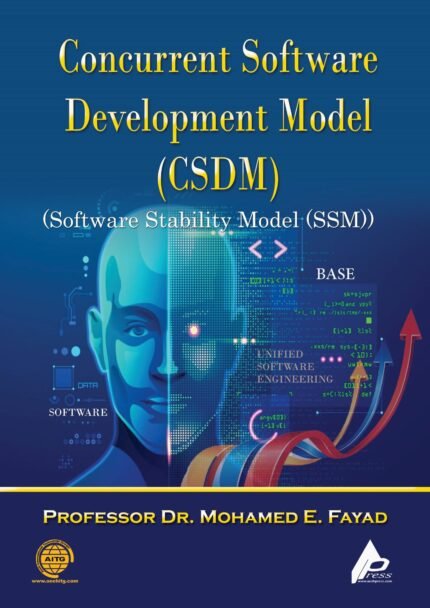
Concurrent Software Development Model (CSDM) (Software Stability Model (SSM))
Software Stability Model (SSM) is a radically new and disruptive innovation in the field of software engineering. It is a new way of looking at how any software development effort should be undertaken, different from the approaches that we see today. SSM moves on from the traditional ways of software development where a specific software artifact is developed for every different specific application scenario to an approach that promotes factoring in the needs for the future as well and thus making the software thus developed, ‘stable’ over time, i.e.it need not be changed in a big way repeatedly. SSM provides unique and unified methodology such as high returns on investment, complete and comprehensive development of concurrent, unified, stable, executable functional and non-functional requirements, Ultimate Design, Unified Software Architectures on-Demand, and unified Immune Testing, etc. SSM brings along a list of qualities, such as true unification, stability, scalability, adaptability, extensibility, configurability, maintainability, unlimited reuse, applicability, and more to any software developed in any domain along the lines of this development methodology. SSM also does not draw a hard line of transition between the various steps in any software development methodology. For example, the requirements, design, coding, and testing for any given functionality are done in one go. Such activities can be done for each of the functionalities that have to be included in the software, in a concurrent fashion, thus SSM can also be termed as the Concurrent Software Development Model (CSDM). This presentation is an introduction to the Software Stability Model and how it can be used for any software development undertaking from start to the delivery.
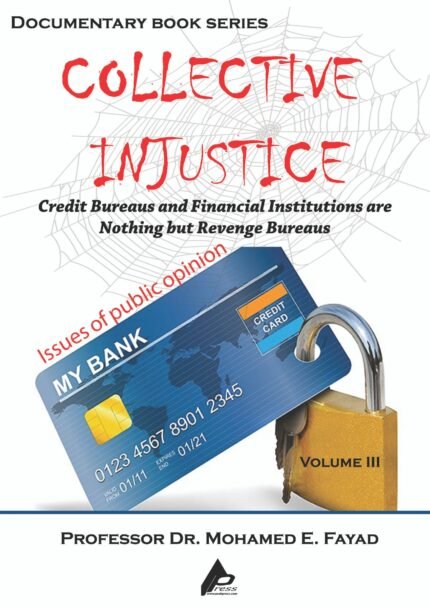

Credit Bureaus and Financial Institutions are nothing but Vindictive Bureaus by Dr. Mohamed E. Fayad
Credit Bureaus and Financial Institutions are nothing but Vindictive Bureaus. I have suffered a lot from the mistreatment of companies, banks, credit bureaus, and Wells Fargo, which I think colluded with the bank I deal with and deliberately destroyed my financial reputation and all my business, which negatively affected all my activities and deprived me of my economic rights by publishing false information about me to all financial institutions and all parties that need a financial report on me. In the last six years, I have compiled a complete record of all credit companies and their offices, due to which I wasted a lot of time contacting all of them on the phone and writing correspondence to them. However, they didn't help me with anything. Moreover, I didn't get any support from them to compensate me for what I suffered, like severe losses and damages, and they unjustly robbed me of money. Please consider these allegations of mine because they are tough. You can check the evidence attached to the book, which includes the latest information about my bank and credit cards and contains many errors and contradictions. I am tired of being rejected and unwarrantedly mistreated by all banks.
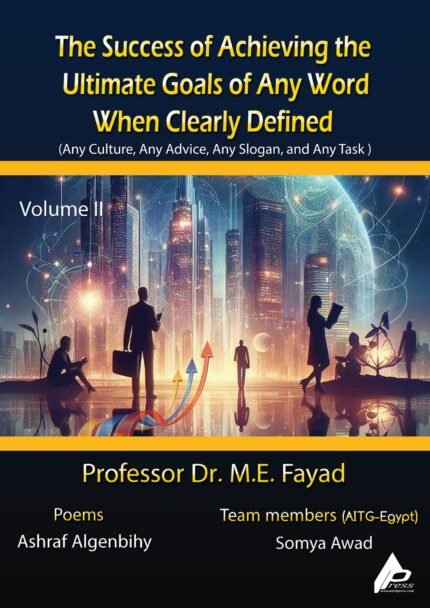
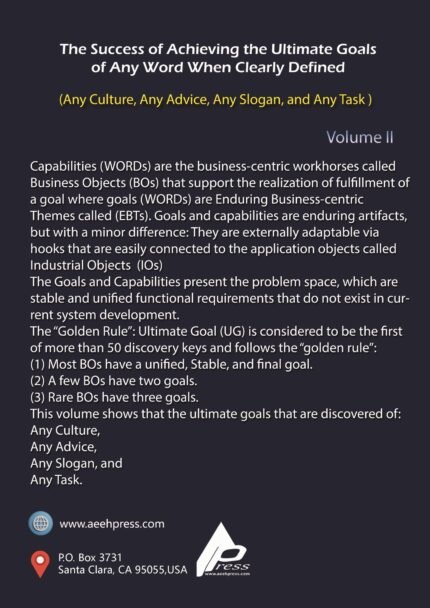
The Success of Achieving the Ultimate Goals of Any Word When Clearly Defined (Any Culture, Any Advice, Any Slogan, and Any Task )
Capabilities (WORDs) are the business-centric workhorses called Business Objects (BOs) that support the realization of fulfillment of a goal where goals (WORDs) are Enduring Business-centric Themes called (EBTs). Goals and capabilities are enduring artifacts, but with a minor difference: They are externally adaptable via hooks that are easily connected to the application objects called Industrial Objects (IOs) The Goals and Capabilities present the problem space, which are stable and unified functional requirements that do not exist in current system development. The “Golden Rule”: Ultimate Goal (UG) is considered to be the first of more than 50 discovery keys and follows the “golden rule”: (1) Most BOs have a unified, Stable, and final goal. (2) A few BOs have two goals. (3) Rare BOs have three goals. This volume shows that the ultimate goals that are discovered of: Any Culture, Any Advice, Any Slogan, and Any Task.
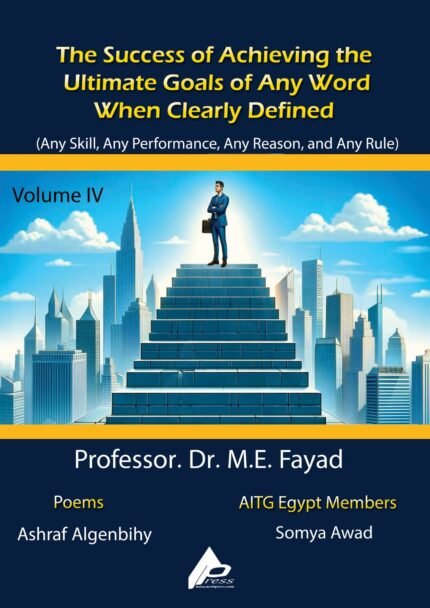
The Success of Achieving the Ultimate Goals of Any Word When Clearly Defined (Any Skill, Any Performance, Any Reason, and Any Rule)
Capabilities (WORDs) are the business-centric workhorses called Business Objects (BOs) that support the realization of fulfillment of a goal where goals (WORDs) are Enduring Business-centric Themes called (EBTs). Goals and capabilities are enduring artifacts, but with a minor difference: They are externally adaptable via hooks that are easily connected to the application objects called Industrial Objects (IOs) The Goals and Capabilities present the problem space, which are stable and unified functional requirements that do not exist in current system development. The “Golden Rule”: Ultimate Goal (UG) is considered to be the first of more than 50 discovery keys and follows the “golden rule”: (1) Most BOs have a unified, Stable, and final goal. (2) A few BOs have two goals. (3) Rare BOs have three goals. This volume shows that the ultimate goals that are discovered of: Any Skill, Any Performance, Any Reason, and Any Rule

The Tale of an Egyptian with an American Passport by Professor Dr. Mohamed E. Fayad
I am an American of Egyptian descent, a university professor, scientist, and founder of some new sciences. I am 72 years old, a resident of San Jose, and a lover of all humanity. However, my company and I have long suffered from collective injustices from most people and organizations I deal with. I am facing disastrous problems and severe obstacles in my work and private life, as if this is an intentional thing and a systematic campaign against me and all the innovators and their companies in Egypt, America, and the Arab countries in general. People, communities, and organizations must unite worldwide to do good and help those in need. However, unfortunately, many people and man y governmental and civil organizations join and gather to do me wrong as if they find pleasure in it, whether in the USA or Egypt, as if they were enjoying my pain, getting high while sipping from my flowing blood in full cups, and eating at the table of my tragedy as if only they were at their last supper. It seems that these problems I suffer from also affect all startups and their founders, as injustice has spread, justice is missing, conscience is dead, and morals are lost. If all these abuses are against me only, then I reluctantly accept them. However, suppose they extend to affect the human community as a whole. In that case, we must stand up and combat this injustice and resist the hateful racism that destroyed the dreams of millions of people, including me. Should we, as a human society, wait for the advent of another Martin Luther King, waging wars to end racism and injustice to all human beings? In Your Hands is a book from a series that depicts my tragedy and personal experience. I deposited my grievances between its covers to be read by every person with a lively conscience, an enlightened mind, and a heart that beats with truth and goodness. This is to relieve me of the injustice that has befallen me and restore some of my lost rights. If you have the same experience and suffer from the same tragedy, please get in touch with me to unite to eliminate the injustice against you and my startup companies. We are the basis of renaissance, civilization, and development worldwide.
Unified Software Engineering Reuse (USER)
USER and systems built by using it answer the problems of low reuse, high costs, phasing out software solutions, components with significant impedance mismatch to be reused, and more. Research and development done for USER would enable the practitioners and researchers of software engineering to look at new ways of developing software that solves these problems, especially dealing with the issues associated with requirements and domain analysis in reuse. Unified Software Engineering Reuse (USER) would give rise to a new way of looking at software and building software solutions. USER can enable interdisciplinary research development in a big way and can bring different bodies of knowledge, and applications together, e.g., for biochemistry, bioinformatics, medicine, media, etc. USER enables building software systems that are self-adaptable and applicable for applications spanning multiple domains, unlike traditional software tools. It can be a catalyst for bringing scientists and students from varied fields to a common ground and building applications across these different bodies of knowledge. USER takes the field of software engineering to the next level. Software has become integral to everything our environment consists of today. The book presents a pragmatic and an intuitive approach to understanding the problem of existing reuse and utilizing USER as the central perspective of experience and business-centric intuition (stable reuse techniques and assets).
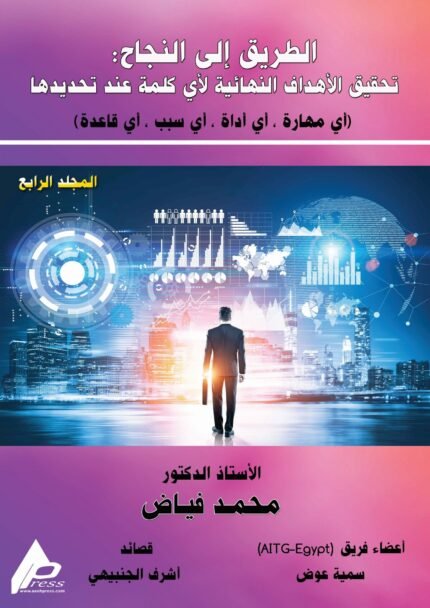
الطريق إلى النجاح: تحقيق الأهداف النهائية لأي كلمة عند تحديدها
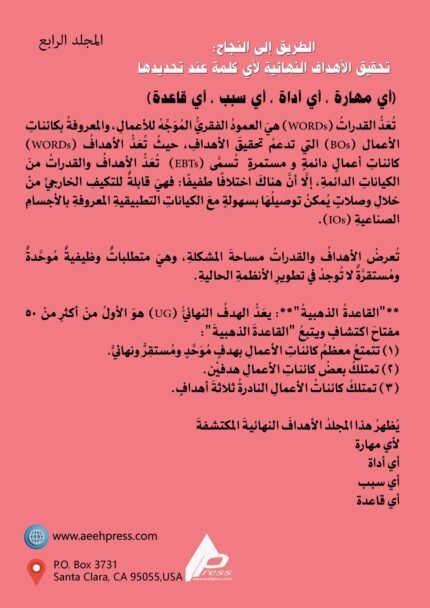
Capabilities (WORDs) are the business-centric workhorses called Business Objects (BOs) that support the realization of fulfillment of a goal where goals (WORDs) are Enduring Business-centric Themes called (EBTs). Goals and capabilities are enduring artifacts, but with a minor difference: They are externally adaptable via hooks that are easily connected to the application objects called Industrial Objects (IOs) The Goals and Capabilities present the problem space, which are stable and unified functional requirements that do not exist in current system development. The “Golden Rule”: Ultimate Goal (UG) is considered to be the first of more than 50 discovery keys and follows the “golden rule”: (1) Most BOs have a unified, Stable, and final goal. (2) A few BOs have two goals. (3) Rare BOs have three goals. This volume shows that the ultimate goals that are discovered of: Any Skill, Any Performance, Any Reason, and Any Rule


Reviews
There are no reviews yet.