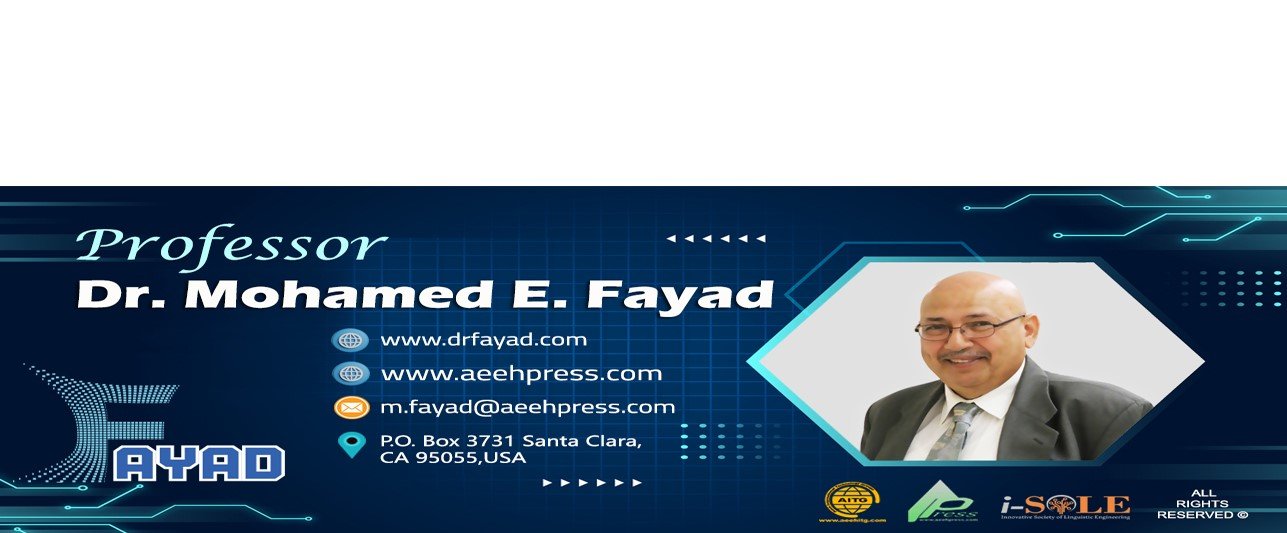
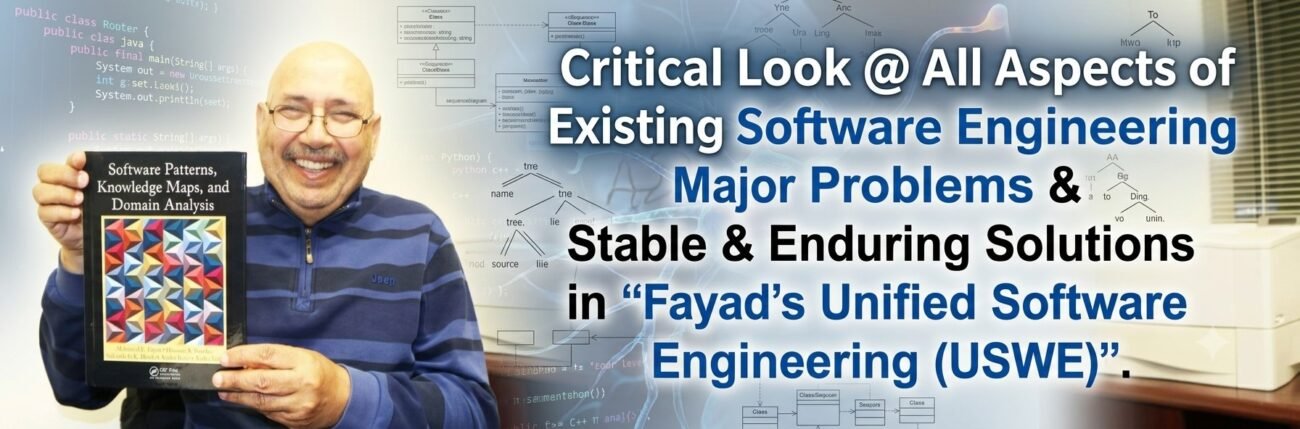
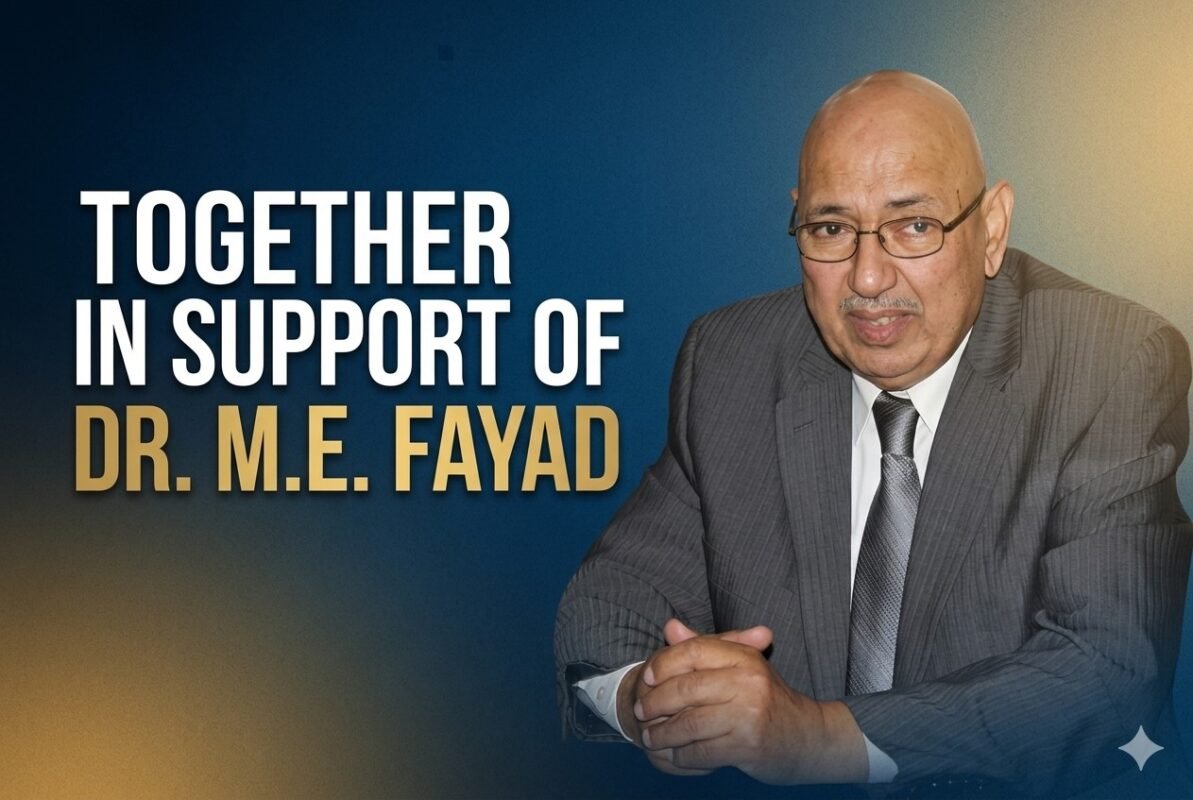
Dr. M.E. Fayad is a full professor of Computer Engineering at San Jose State University since 2002. Previously, he was J.D. Edwards's professor of Software Engineering in the Department of Computer Science & Engineering at the University of Nebraska, Lincoln, from 1999 to 2002. Between 1995 and 1999, he was an associate professor of Computer Science and a faculty of Computer Engineering at the University of Nevada. He has more than fifteen years of industrial experience in addition to ten years as a software architect in companies, such as McDonnell Douglas and Philips Research Laboratory. His reputation has grown by his achievements in the industry—he has been an IEEE distinguished speaker, an associate editor, editorial advisor, a columnist for The Communications of the ACM (his column is Thinking Objectively), a columnist for Al-Ahram Egyptians Newspaper (2 million subscribers), an editor-in-chief for IEEE Computer Society Press—Computer Science and Engineering Practice Press (1995–1997), a general chair of IEEE/Arab Computer Society International Conference on Computer Systems and Applications (AICCSA 2001), Beirut, Lebanon, June 26–29, 2001, and the founder and president of Arab Computer Society (ACS) from April 2004 to April 2007.
Dr. M.E. Fayad is a full professor of Computer Engineering at San Jose State University since 2002. Previously, he was J.D. Edwards's professor of Software Engineering in the Department of Computer Science & Engineering at the University of Nebraska, Lincoln, from 1999 to 2002. Between 1995 and 1999, he was an associate professor of Computer Science and a faculty of Computer Engineering at the University of Nevada. He has more than fifteen years of industrial experience in addition to ten years as a software architect in companies, such as McDonnell Douglas and Philips Research Laboratory. His reputation has grown by his achievements in the industry—he has been an IEEE distinguished speaker, an associate editor, editorial advisor, a columnist for The Communications of the ACM (his column is Thinking Objectively), a columnist for Al-Ahram Egyptians Newspaper (2 million subscribers), an editor-in-chief for IEEE Computer Society Press—Computer Science and Engineering Practice Press (1995–1997), a general chair of IEEE/Arab Computer Society International Conference on Computer Systems and Applications (AICCSA 2001), Beirut, Lebanon, June 26–29, 2001, and the founder and president of Arab Computer Society (ACS) from April 2004 to April 2007.