




سنوات الغربة (رحلة انطلاق من السنبلاوين إلى أمريكا) للأستاذ الدكتور محمد فياض
Price range: $12.59 through $21.99

نفوس شيطانية للأستاذ الدكتور محمد فياض
Price range: $7.59 through $12.99
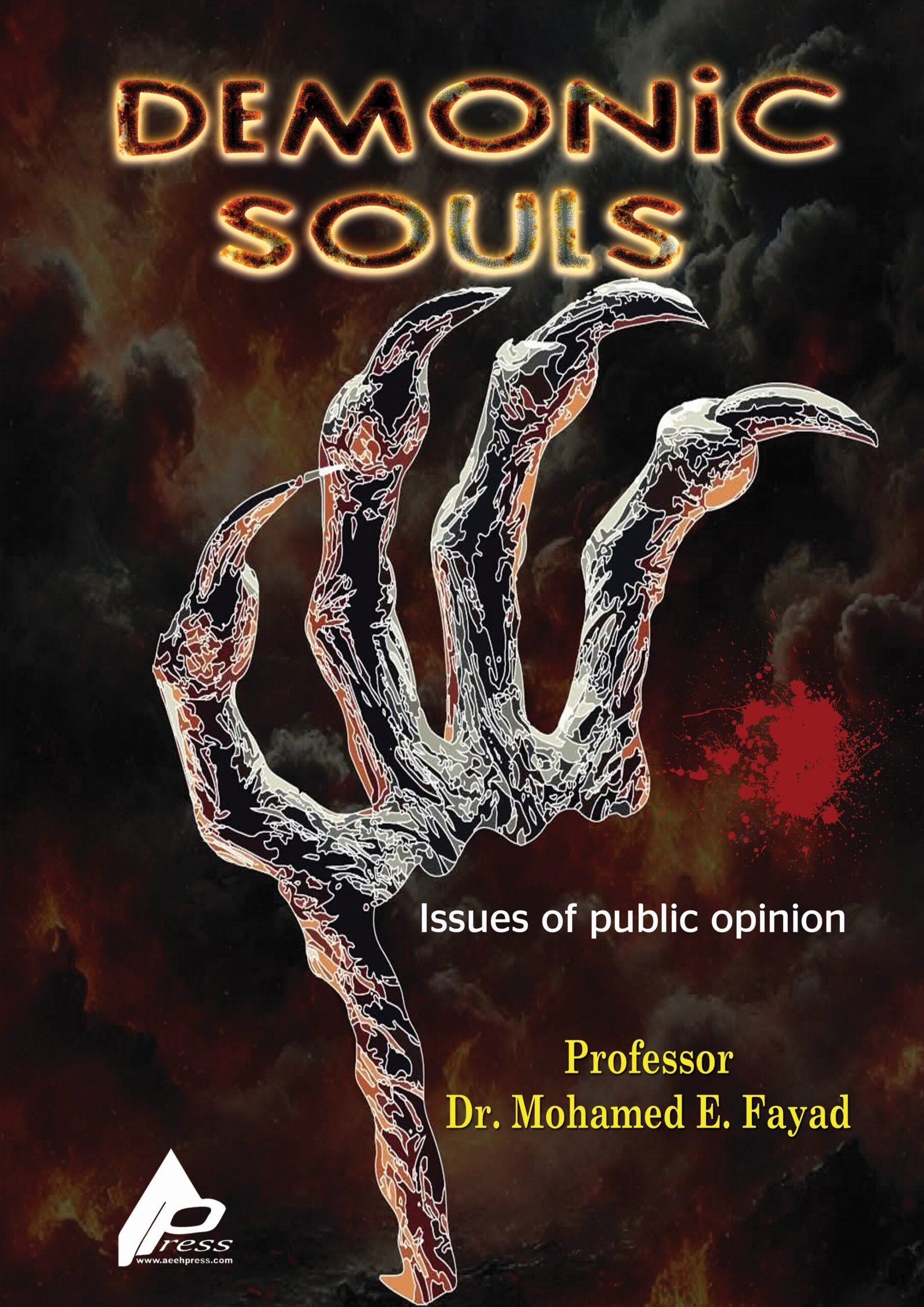
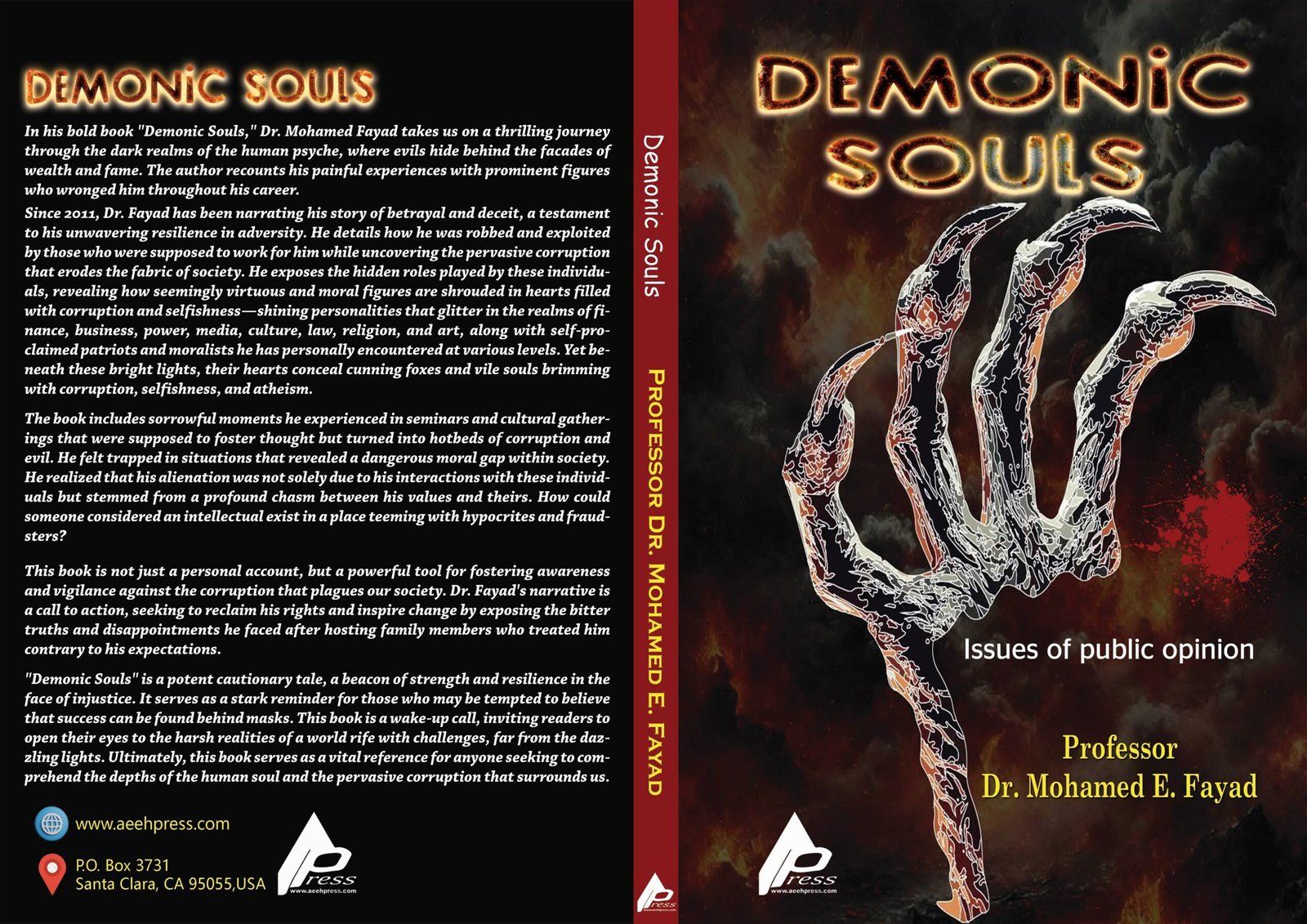
Demonic Souls by Professor Dr. Mohamed E. Fayad
Price range: $7.59 through $15.99
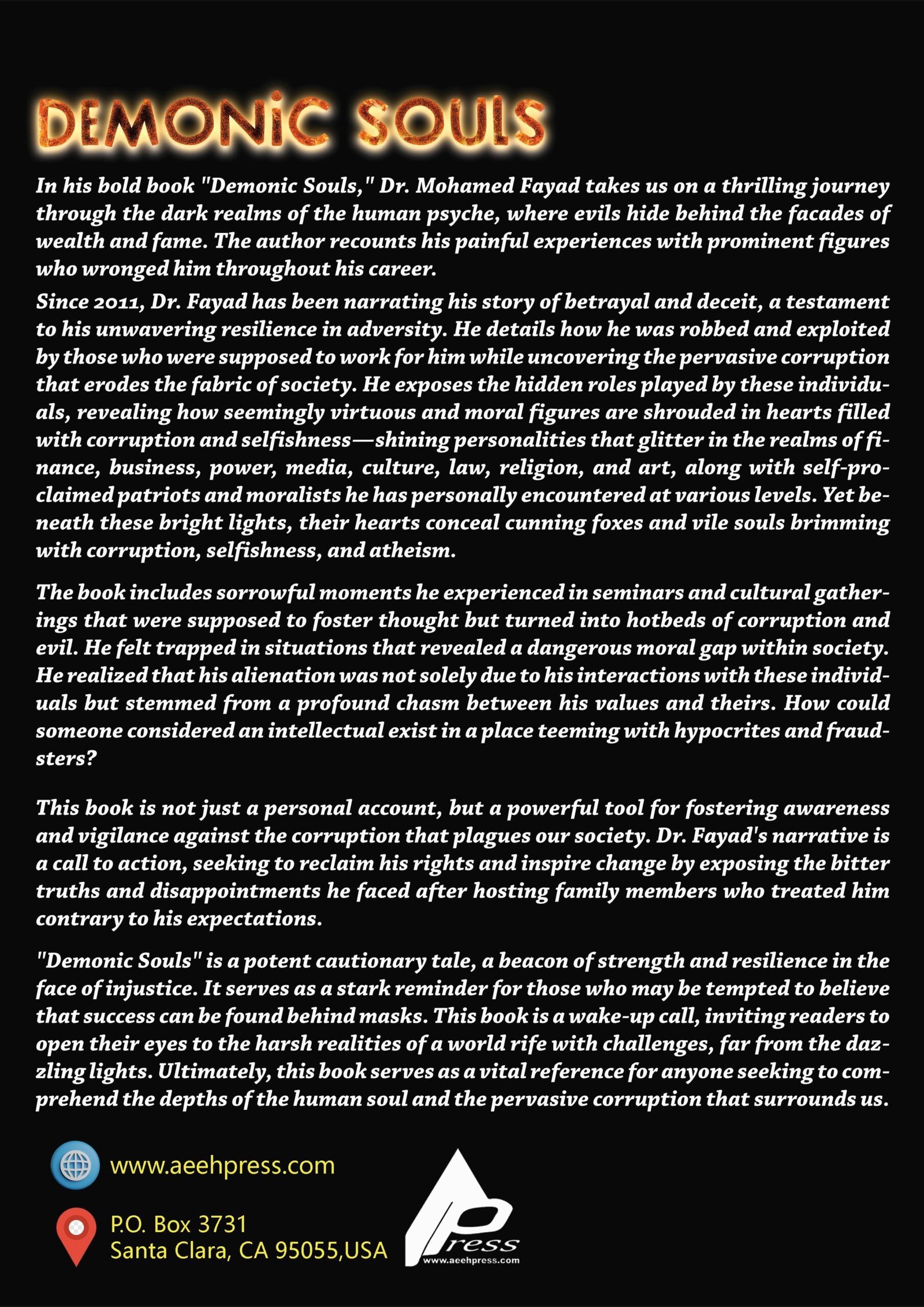
In his bold book “Demonic Souls,” Dr. Mohamed Fayad takes us on a thrilling journey through the dark realms of the human psyche, where evils hide behind the facades of wealth and fame. The author recounts his painful experiences with prominent figures who wronged him throughout his career. Since 2011, Dr. Fayad has been narrating his story of betrayal and deceit, a testament to his unwavering resilience in adversity. He details how he was robbed and exploited by those who were supposed to work for him while uncovering the pervasive corruption that erodes the fabric of society. He exposes the hidden roles played by these individuals, revealing how seemingly virtuous and moral figures are shrouded in hearts filled with corruption and selfishness—shining personalities that glitter in the realms of finance, business, power, media, culture, law, religion, and art, along with self-proclaimed patriots and moralists he has personally encountered at various levels. Yet beneath these bright lights, their hearts conceal cunning foxes and vile souls brimming with corruption, selfishness, and atheism. The book includes sorrowful moments he experienced in seminars and cultural gatherings that were supposed to foster thought but turned into hotbeds of corruption and evil. He felt trapped in situations that revealed a dangerous moral gap within society. He realized that his alienation was not solely due to his interactions with these individuals but stemmed from a profound chasm between his values and theirs. How could someone considered an intellectual exist in a place teeming with hypocrites and fraudsters? This book is not just a personal account, but a powerful tool for fostering awareness and vigilance against the corruption that plagues our society. Dr. Fayad’s narrative is a call to action, seeking to reclaim his rights and inspire change by exposing the bitter truths and disappointments he faced after hosting family members who treated him contrary to his expectations. “Demonic Souls” is a potent cautionary tale, a beacon of strength and resilience in the face of injustice. It serves as a stark reminder for those who may be tempted to believe that success can be found behind masks. This book is a wake-up call, inviting readers to open their eyes to the harsh realities of a world rife with challenges, far from the dazzling lights. Ultimately, this book serves as a vital reference for anyone seeking to comprehend the depths of the human soul and the pervasive corruption that surrounds us.
| BOOK | Hardcover, Paperback, Kindle |
|---|
Description
Product details
-
Publisher : AEEH PRESS INC
-
Language : English
-
Paperback : 255 pages
-
ISBN-13 :
Coming Soon
-
Item Weight : 1.14 pounds
-
Dimensions : 6 x 0.68 x 9 inches
Book flyers
Copyright © 2025 AEEH PRESS INC
All Rights Reserved. No part of this publication may be reproduced, stored in a retrieval system, or transmitted, in any form or by any means, electronic, mechanical, photocopying, recording, or otherwise, without the written permission of the author.
Reviews (0)
Only logged in customers who have purchased this product may leave a review.
Shipping & Delivery


Related products
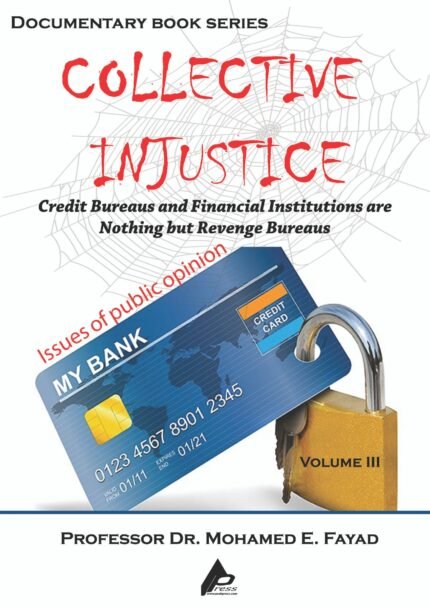

Credit Bureaus and Financial Institutions are nothing but Vindictive Bureaus by Dr. Mohamed E. Fayad
Credit Bureaus and Financial Institutions are nothing but Vindictive Bureaus. I have suffered a lot from the mistreatment of companies, banks, credit bureaus, and Wells Fargo, which I think colluded with the bank I deal with and deliberately destroyed my financial reputation and all my business, which negatively affected all my activities and deprived me of my economic rights by publishing false information about me to all financial institutions and all parties that need a financial report on me. In the last six years, I have compiled a complete record of all credit companies and their offices, due to which I wasted a lot of time contacting all of them on the phone and writing correspondence to them. However, they didn't help me with anything. Moreover, I didn't get any support from them to compensate me for what I suffered, like severe losses and damages, and they unjustly robbed me of money. Please consider these allegations of mine because they are tough. You can check the evidence attached to the book, which includes the latest information about my bank and credit cards and contains many errors and contradictions. I am tired of being rejected and unwarrantedly mistreated by all banks.
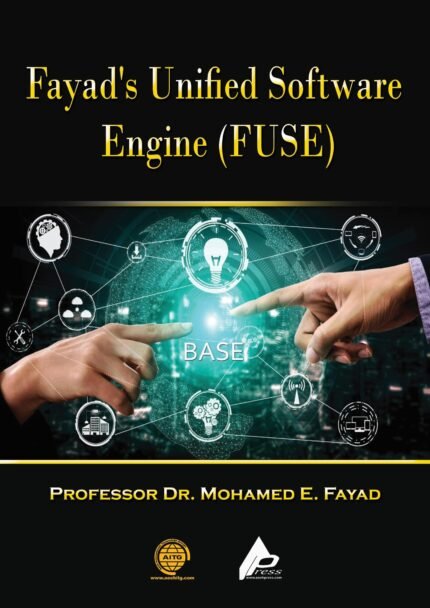
Fayad’s Unified Software Engine (FUSE)
A fuse is a standard device found in any electrical system. Examples include a home, an automobile, a power tool, and many more. The fuse itself is standard and comes in a relatively small number of variants about the required application and the amperage or load the fuse is expected to carry. For a particular application and load, fuses are typically interchangeable. If the FUSE fails, the circuit is open and will not conduct electricity. Plug in a new fuse, and the circuit is complete and resumes operation. These software programs have insidious problems, such as Lack of reliability; Lack of stability/unstable; Excessively costly (billions) to build, purchase and operate; Brittle; Software projects that continue to fail at an alarming rate; hardware dependency; maintenance nightmare; etc. The Ultimate Alternative is Fayad's Unified Software Engine (FUSE). 1) Capture the art, science, and engineering of the engine; 2) Capture and develop the engine's unified and stable functional and non-functional requirements; 3) Develop the ultimate design and unified software architecture on-demand of the engine; 4) The new and improved next generation of solutions; 5) Built on any common core infrastructure, e.g., SaaS infrastructures; 6) Facilitate on-demand, highly reusable architectures and applications with rapid times and open space to the market, starting from require ments to final product delivery; 7) Incorporating qualities such as scalability, adaptability, maintainability, unlimited reuse and applicability, and many more; 8) Stop building instance-oriented systems and reinventing the wheels; 9) Prevent hardware dependencies, etc.
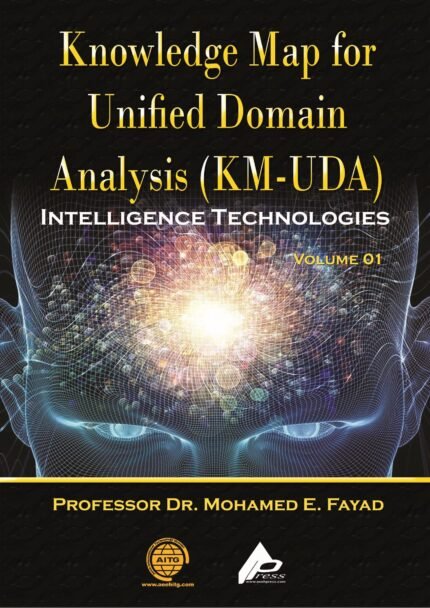
Knowledge Map for Unified Domain Analysis (KM-UDA) Volume 01 – Intelligence Technologies
Problem space is the set of all problems and represents "What" are any domain's functional and non-functional requirements? And it is not a subset of the solution space. Knowledge Map for Unified Domain Analysis (KM-UDA) discovers all the truths (the functional and non-functional requirements) about any domain. The existing domain analysis techniques and domain experts are very good at identifying the tangible aspects of any discipline that considers the applications aspect of the analyzed field. KM-UDA forms the basis, core, and strong and unified foundation to understand any domain problem and its solution patterns. KM-UDA can create analysis based on the fundamental concepts of unification and stability. This book contains the following KM-UDA: 1. Knowledge Map of Stable Machine Learning (KM-SML) 2. Knowledge Map of Unified Deep Learning (KM-UDL) 3. Knowledge Map of Unified Black Chain (KM-UBC) 4. Knowledge Map of Stable Wearable Technology (KM-SWT) 5. Knowledge Map of Unified Smart Home (KM-SSH)

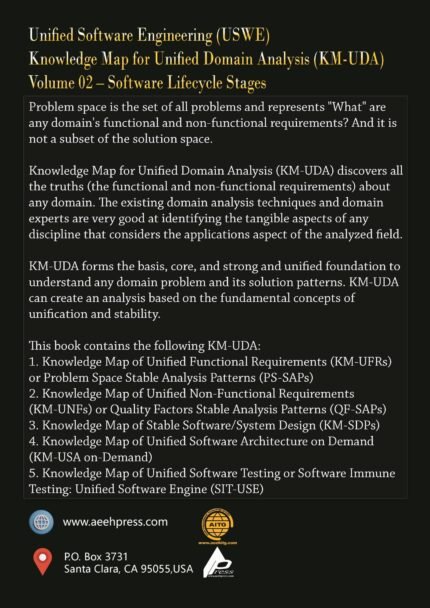
Knowledge Map for Unified Domain Analysis (KM-UDA) Volume 02 – Software Lifecycle Stages
Problem space is the set of all problems and represents "What" are any domain's functional and non-functional requirements? And it is not a subset of the solution space. Knowledge Map for Unified Domain Analysis (KM-UDA) discovers all the truths (the functional and non-functional requirements) about any domain. The existing domain analysis techniques and domain experts are very good at identifying the tangible aspects of any discipline that considers the applications aspect of the analyzed field. KM-UDA forms the basis, core, and strong and unified foundation to understand any domain problem and its solution patterns. KM-UDA can create an analysis based on the fundamental concepts of unification and stability. This book contains the following KM-UDA: 1. Knowledge Map of Unified Functional Requirements (KM-UFRs) or Problem Space Stable Analysis Patterns (PS-SAPs) 2. Knowledge Map of Unified Non-Functional Requirements (KM-UNFs) or Quality Factors Stable Analysis Patterns (QF-SAPs) 3. Knowledge Map of Stable Software/System Design (KM-SDPs) 4. Knowledge Map of Unified Software Architecture on Demand (KM-USA on-Demand) 5. Knowledge Map of Unified Software Testing or Software Immune Testing: Unified Software Engine (SIT-USE)
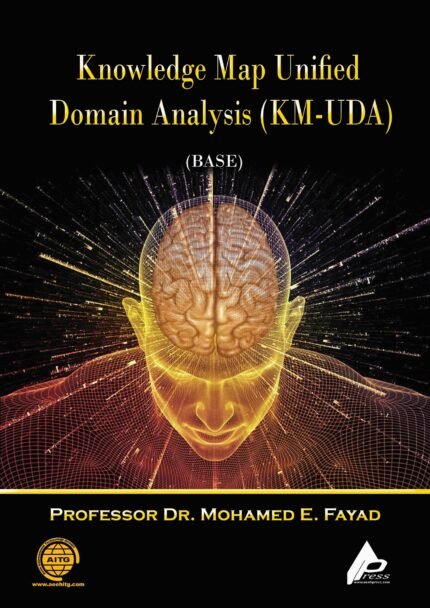
Knowledge Map Unified Domain Analysis (KM-UDA) (BASE)
Galileo Galilei said, "All truths are easy to understand once they are discovered; the point is to discover them." Knowledge Map (KM) discovers all the truths about any domain. The existing domain analysis techniques and domain experts are very good at identifying the tangible aspects of any discipline that considers the applications aspect of the analyzed field. Knowledge Map Unified Domain Analysis (KM-UDA) forms the basis, core, and strong and unified foundation to understand any domain problem and its solution patterns. KM-UDA can create reusable and stable pattern languages and their analysis, design, and architectural patterns. KM's main idea is to allow practitioners and developers to master the particular discipline of interest through accurate domain analysis using KMs, via stable patterns and an insightful methodological process. It gives practitioners and developers the necessary means and tools for a complete retrospective of the stable patterns pertinent to a discipline of particular interest and the tidbits of advice on how to use them to satisfy specific needs. This book delineates a new creative process and provides an understanding of the knowledge map for domain analysis based on the fundamental concepts of unification and stability.

The Success of Achieving the Ultimate Goals of Any Word When Clearly Defined (Any Project, Any Proposal, Any Debate, Any Strategy)
Capabilities (WORDs) are the business-centric workhorses called Business Objects (BOs) that support the realization of fulfillment of a goal where goals (WORDs) are Enduring Business-centric Themes called (EBTs). Goals and capabilities are enduring artifacts, but with a minor difference: They are externally adaptable via hooks that are easily connected to the application objects called Industrial Objects (IOs) The Goals and Capabilities present the problem space, which are stable and unified functional requirements that do not exist in current system development. The “Golden Rule”: Ultimate Goal (UG) is considered to be the first of more than 50 discovery keys and follows the “golden rule”: (1) Most BOs have a unified, Stable, and final goal. (2) A few BOs have two goals. (3) Rare BOs have three goals. This volume shows that the ultimate goals that are discovered of: Any Project, Any Proposal, Any Strategy, and Any Debate.
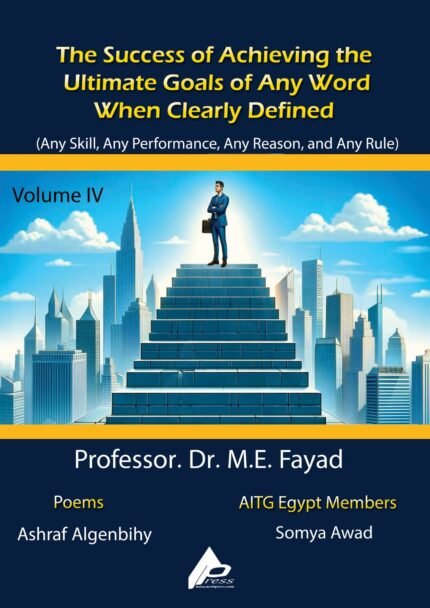
The Success of Achieving the Ultimate Goals of Any Word When Clearly Defined (Any Skill, Any Performance, Any Reason, and Any Rule)
Capabilities (WORDs) are the business-centric workhorses called Business Objects (BOs) that support the realization of fulfillment of a goal where goals (WORDs) are Enduring Business-centric Themes called (EBTs). Goals and capabilities are enduring artifacts, but with a minor difference: They are externally adaptable via hooks that are easily connected to the application objects called Industrial Objects (IOs) The Goals and Capabilities present the problem space, which are stable and unified functional requirements that do not exist in current system development. The “Golden Rule”: Ultimate Goal (UG) is considered to be the first of more than 50 discovery keys and follows the “golden rule”: (1) Most BOs have a unified, Stable, and final goal. (2) A few BOs have two goals. (3) Rare BOs have three goals. This volume shows that the ultimate goals that are discovered of: Any Skill, Any Performance, Any Reason, and Any Rule
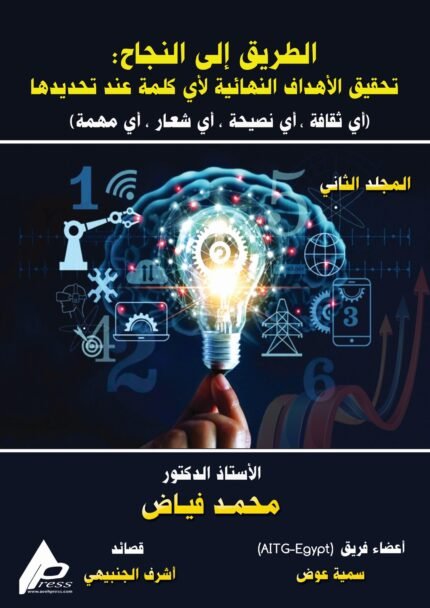
الطريق إلى النجاح: تحقيق الأهداف النهائية لأي كلمة عند تحديدها
Capabilities (WORDs) are the business-centric workhorses called Business Objects (BOs) that support the realization of fulfillment of a goal where goals (WORDs) are Enduring Business-centric Themes called (EBTs). Goals and capabilities are enduring artifacts, but with a minor difference: They are externally adaptable via hooks that are easily connected to the application objects called Industrial Objects (IOs) The Goals and Capabilities present the problem space, which are stable and unified functional requirements that do not exist in current system development. The “Golden Rule”: Ultimate Goal (UG) is considered to be the first of more than 50 discovery keys and follows the “golden rule”: (1) Most BOs have a unified, Stable, and final goal. (2) A few BOs have two goals. (3) Rare BOs have three goals. This volume shows that the ultimate goals that are discovered of: Any Culture, Any Advice, Any Slogan, and Any Task.
Reviews
There are no reviews yet.