







الطريق إلى النجاح: تحقيق الأهداف النهائية لأي كلمة عند تحديدها
Price range: $29.59 through $49.59
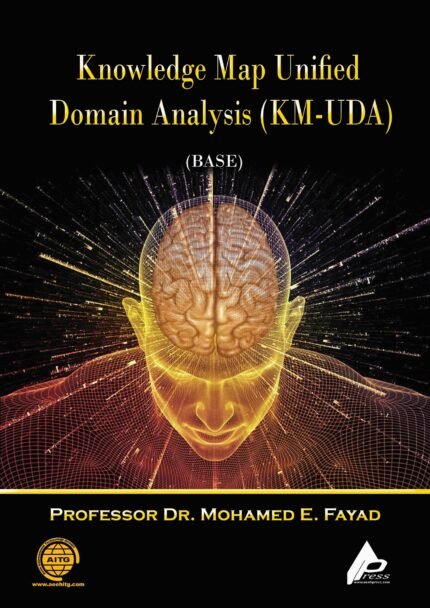
Knowledge Map Unified Domain Analysis (KM-UDA) (BASE)
Price range: $99.99 through $9,000.00
الطريق إلى النجاح: تحقيق الأهداف النهائية لأي كلمة عند تحديدها
Price range: $29.59 through $49.59
Capabilities (WORDs) are the business-centric workhorses called Business Objects (BOs) that support the realization of fulfillment of a goal where goals (WORDs) are Enduring Business-centric Themes called (EBTs). Goals and capabilities are enduring artifacts, but with a minor difference: They are externally adaptable via hooks that are easily connected to the application objects called Industrial Objects (IOs) The Goals and Capabilities present the problem space, which are stable and unified functional requirements that do not exist in current system development. The “Golden Rule”: Ultimate Goal (UG) is considered to be the first of more than 50 discovery keys and follows the “golden rule”: (1) Most BOs have a unified, Stable, and final goal. (2) A few BOs have two goals. (3) Rare BOs have three goals. This volume shows that the ultimate goals that are discovered of: Any Skill, Any Performance, Any Reason, and Any Rule
| BOOK |
Hardcover ,Paperback ,Kindle |
|---|
Description
Product details
- Publisher : AEEH PRESS INC (April 13, 2024)
- Language : English
- Paperback : 255 pages
- ISBN: 978-1-964282-23-7
- Item Weight : 1.14 pounds
- Dimensions : 6 x 0.68 x 9 inches
- AITG Egypt Members Somya Awad
- Poems Ashraf Algenbihy
- Illustrations by Mahmoud Asaad
- Calligrapher and language editor Kamal Saad
Book flyers
Copyright © 2025 AEEH PRESS INC
All Rights Reserved. No part of this publication may be reproduced, stored in a retrieval system, or transmitted, in any form or by any means, electronic, mechanical, photocopying, recording, or otherwise, without the written permission of the author.
Reviews (0)
Shipping & Delivery


Related products
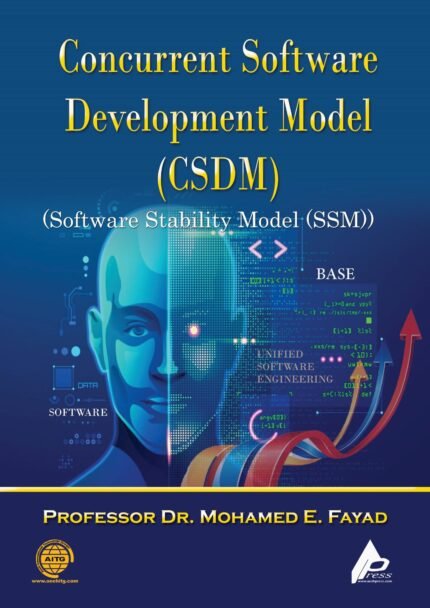
Concurrent Software Development Model (CSDM) (Software Stability Model (SSM))
Software Stability Model (SSM) is a radically new and disruptive innovation in the field of software engineering. It is a new way of looking at how any software development effort should be undertaken, different from the approaches that we see today. SSM moves on from the traditional ways of software development where a specific software artifact is developed for every different specific application scenario to an approach that promotes factoring in the needs for the future as well and thus making the software thus developed, ‘stable’ over time, i.e.it need not be changed in a big way repeatedly. SSM provides unique and unified methodology such as high returns on investment, complete and comprehensive development of concurrent, unified, stable, executable functional and non-functional requirements, Ultimate Design, Unified Software Architectures on-Demand, and unified Immune Testing, etc. SSM brings along a list of qualities, such as true unification, stability, scalability, adaptability, extensibility, configurability, maintainability, unlimited reuse, applicability, and more to any software developed in any domain along the lines of this development methodology. SSM also does not draw a hard line of transition between the various steps in any software development methodology. For example, the requirements, design, coding, and testing for any given functionality are done in one go. Such activities can be done for each of the functionalities that have to be included in the software, in a concurrent fashion, thus SSM can also be termed as the Concurrent Software Development Model (CSDM). This presentation is an introduction to the Software Stability Model and how it can be used for any software development undertaking from start to the delivery.
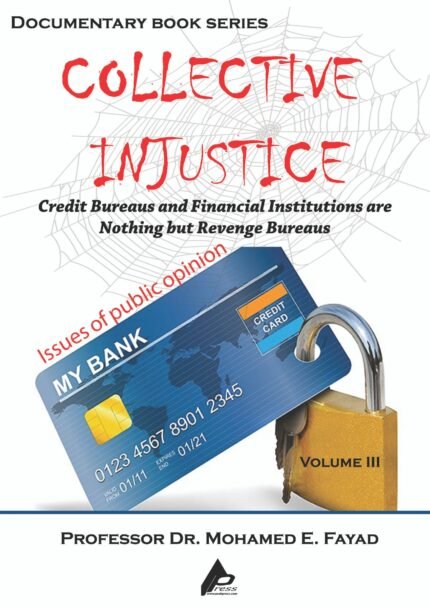

Credit Bureaus and Financial Institutions are nothing but Vindictive Bureaus by Dr. Mohamed E. Fayad
Credit Bureaus and Financial Institutions are nothing but Vindictive Bureaus. I have suffered a lot from the mistreatment of companies, banks, credit bureaus, and Wells Fargo, which I think colluded with the bank I deal with and deliberately destroyed my financial reputation and all my business, which negatively affected all my activities and deprived me of my economic rights by publishing false information about me to all financial institutions and all parties that need a financial report on me. In the last six years, I have compiled a complete record of all credit companies and their offices, due to which I wasted a lot of time contacting all of them on the phone and writing correspondence to them. However, they didn't help me with anything. Moreover, I didn't get any support from them to compensate me for what I suffered, like severe losses and damages, and they unjustly robbed me of money. Please consider these allegations of mine because they are tough. You can check the evidence attached to the book, which includes the latest information about my bank and credit cards and contains many errors and contradictions. I am tired of being rejected and unwarrantedly mistreated by all banks.
Software Engineering in The Small.
Over the past many years, software has become a vital component of almost every business and national economy. Virtually any product or service has become software enabled. As a result, organizations’ competitiveness largely depends on their ability to use the software as a competitive weapon. What makes the competitive landscape more complex is the kind of pressures organizations face in terms of time to market, new features, cost, and, of course, quality and reliability. Furthermore, organizations are finding it increasingly challenging to operate as convergence, discontinuity, and economic boundarylessness lead to the birth of a new breed of global customers. And any organization’s survival—let alone success—is therefore clearly becoming dependent on an ability to understand the characteristics of such international customers and serve them accordingly. In their quest for software excellence, organizations must rely increasingly on software engineering techniques and methodologies and rely on and refine their traditional business strategies. This book: 1. Extends four well-known CACM thinking (O=Object) Objective Software Engineering in the Small columns: I. Software Engineering in the Small II. Problems with Scalability III. Management in the Small IV. Process Improvement in the Small 2. Discuss the September/October 2000, IEEE Software Introduction: Software Engineering in the Small theme Issue 3. Comments and explains responses, 4. Answers many questions.
Software Process Development
The software/system process is the fundamental way of abstracting and implementing software/system functional and non-functional requirements, design, architectures, and software testing. Software process describes the steps required to abstract and develop some goal, usually unified skills. Software Processes transform textbook theories and method descriptions into actual action steps. It is essential to realize that processes are codified steps that describe a particular organization's way of achieving development goals. That means development processes cannot be acquired off the shelf but must be developed over time. Management must support the move to process-based development. The software process must be maintained when schedule pressures loom, or process costs initially slow some development phases. Development Processes are essential for innovation development teams, even in a well-organized group. Individuals will often perceive themselves as less skilled than before, and the routines they have established with others will undoubtedly change. Management must ensure that setting process-oriented development will allow team members to contribute positively. This book: 1. Extends four well-known CACM thinking (O=Object) Objective Software Process Development columns: I. Software Development Processes: The Necessary Evil II. Process Assessment: Considered Wasteful III. Surviving a Process Performance Crash IV. The Art of Managing Multiple Processes 2. Comments and explains responses, 3. Answers many questions. 4. Illustrates Software Development Process in three ways: Textual, Dataflow Diagram, and Activity Diagram.
Stable Architecture Patterns (SArchPs) Unified Software Architecture on-Demand (USA on-Demand)
USA on-Demand proposes future trends in "Software Architectures that solve the mentioned challenges above and Look Seriously at "Unified Software Architecture on-Demand (F-USA on-Demand) ." The rapid growth of technology, coupled with the tightened development time and production cost constraints, have imposed tremendous pressure and an intense desire for software enterprises to create new and innovative designs which could respond to rapidly changing business and operating environments. Therefore, enterprises must invest in building stable architectures based on conceptual knowledge more than application context. Any system based on a stable architecture is built in a way that captures the enduring goals that the software is supposed to meet. We refer to these emerging trends of architectures as Architectures on Demand as they are unlimited reusable, adaptable, customizable, extensible, Customizability, self-configurable, self-manageable, and unlimited applicability, according to the future requirements and changes in the operating environments. Adaptability refers to how software system architecture can accommodate changes in its environment constrained by the hardware and software. Customizability refers to the ability of the architecture to be managed and customized by an agent, its users, benefiting applications, and others. Extensibility means that the architecture includes mechanisms for expanding/enhancing the system with new capabilities without making major changes to the architecture and the underlying infrastructure. Good architecture has excellent design principles and guidelines to ensure such architecture's excellency. Self-configurable and self-manageable architectures refer to the architectures of systems that can manage and "self-heal" their properties dynamically at the level of components, connectors, and the underlying infrastructure. The crosscutting concern for all these properties is that dependability should continue to be maintained and evolve the adaptation of the architectures on demand.

Wells Fargo: a symbol of denial and irresponsibility by Dr. Mohamed E. Fayad
Credit Bureaus and Financial InsWells Fargo: a symbol of denial and irresponsibility I became at the end of my rope after my rights were lost, my reputation was tarnished, and my financial and social situation was weak when my ex-wife seized the opportunity to open two accounts at Wells Fargo Bank without my knowledge in 2012. Moreover, in collaboration with a bank employee, she forged my signature during my illness and heart transplant in July 2016. My ex-wife kept withdrawing large sums of money from those accounts. After discovering the two accounts in 2018, they were closed. As a result, this matter left a bad reputation in my financial situation and significantly harmed me. Due to this, I fell into significant problems, including being deprived of financial transactions with the bank and being refused any requests I submitted. Moreover, funding sources stopped, and many of my projects stopped with them. My request to open an account for my publishing house was denied despite having all the necessary legal papers. Then, I submitted complaints to the bank to investigate the matter, primarily related to the crime of forging my signature. Still, the case has not been decided so far, and my complaint has not been answered nor investigated as if I were screaming in a desert where no one responded to my call or felt my suffering. The ugliest thing is the inhumane treatment that the bank employees at Wells Fargo used to deal with me. The bank took arbitrary measures against me and my commercial accounts and regularly disbursed vast sums of money to several institutions without my consent. The bank deliberately spent vast sums of money on my ex-wife, who withdrew my savings and money without my permission and knowledge, not to mention the mistreatment by the bank employees. titutions are nothing but Vindictive Bureaus. I have suffered a lot from the mistreatment of companies, banks, credit bureaus, and Wells Fargo, which I think colluded with the bank I deal with and deliberately destroyed my financial reputation and all my business, which negatively affected all my activities and deprived me of my economic rights by publishing false information about me to all financial institutions and all parties that need a financial report on me. In the last six years, I have compiled a complete record of all credit companies and their offices, due to which I wasted a lot of time contacting all of them on the phone and writing correspondence to them. However, they didn't help me with anything. Moreover, I didn't get any support from them to compensate me for what I suffered, like severe losses and damages, and they unjustly robbed me of money. Please consider these allegations of mine because they are tough. You can check the evidence attached to the book, which includes the latest information about my bank and credit cards and contains many errors and contradictions. I am tired of being rejected and unwarrantedly mistreated by all banks.
الطريق إلى النجاح: تحقيق الأهداف النهائية لأي كلمة عند تحديدها
Capabilities (WORDs) are the business-centric workhorses called Business Objects (BOs) that support the realization of fulfillment of a goal where goals (WORDs) are Enduring Business-centric Themes called (EBTs). Goals and capabilities are enduring artifacts, but with a minor difference: They are externally adaptable via hooks that are easily connected to the application objects called Industrial Objects (IOs) The Goals and Capabilities present the problem space, which are stable and unified functional requirements that do not exist in current system development. The “Golden Rule”: Ultimate Goal (UG) is considered to be the first of more than 50 discovery keys and follows the “golden rule”: (1) Most BOs have a unified, Stable, and final goal. (2) A few BOs have two goals. (3) Rare BOs have three goals. This volume shows that the ultimate goals that are discovered of: Any Plan, Any Crime, Any Criteria, Any Assumption.


Reviews
There are no reviews yet.