






حكومتنا في كاليفورنيا ومؤسساتها: لا حياة لمن تنادي بقلم : الأستاذ الدكتور محمد فياض
Price range: $8.59 through $14.99

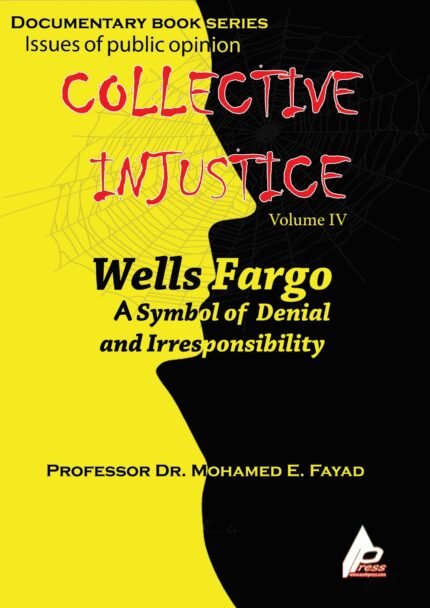
ويلز فارجو: رمز الإنكار واللامسؤولية بقلم : الأستاذ الدكتور محمد فياض
Price range: $8.59 through $14.99
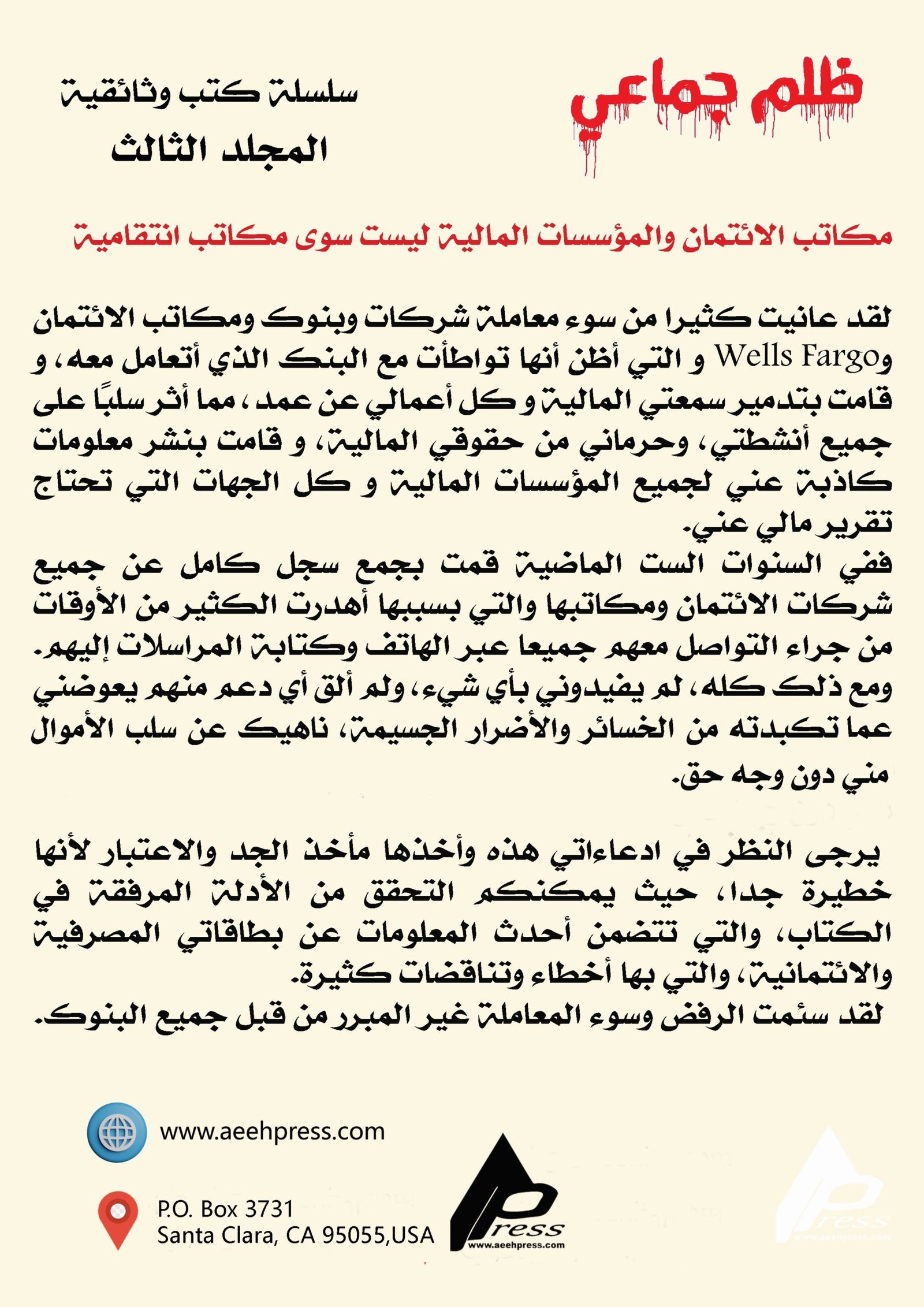
مكاتب الائتمان والمؤسسات المالية ليست سوى مكاتب انتقامية بقلم : الأستاذ الدكتور محمد فياض
Price range: $8.59 through $14.99
Credit Bureaus and Financial Institutions are nothing but Vindictive Bureaus. I have suffered a lot from the mistreatment of companies, banks, credit bureaus, and Wells Fargo, which I think colluded with the bank I deal with and deliberately destroyed my financial reputation and all my business, which negatively affected all my activities and deprived me of my economic rights by publishing false information about me to all financial institutions and all parties that need a financial report on me. In the last six years, I have compiled a complete record of all credit companies and their offices, due to which I wasted a lot of time contacting all of them on the phone and writing correspondence to them. However, they didn’t help me with anything. Moreover, I didn’t get any support from them to compensate me for what I suffered, like severe losses and damages, and they unjustly robbed me of money. Please consider these allegations of mine because they are tough. You can check the evidence attached to the book, which includes the latest information about my bank and credit cards and contains many errors and contradictions. I am tired of being rejected and unwarrantedly mistreated by all banks.
| BOOK | Hardcover, Paperback, Kindle |
|---|
Description
Product details
-
Publisher : AEEH PRESS INC
- Release Date: May 2025 or before
- Number of Pages – between 200 to 250 pages
-
Language : English
-
Paperback : 255 pages
-
ISBN-13 :
978-1-964282-28-2
-
Item Weight : 1.14 pounds
-
Dimensions : 6 x 0.68 x 9 inches
Book flyers
Copyright © 2025 AEEH PRESS INC
All Rights Reserved. No part of this publication may be reproduced, stored in a retrieval system, or transmitted, in any form or by any means, electronic, mechanical, photocopying, recording, or otherwise, without the written permission of the author.
Reviews (0)
Only logged in customers who have purchased this product may leave a review.
Shipping & Delivery


Related products
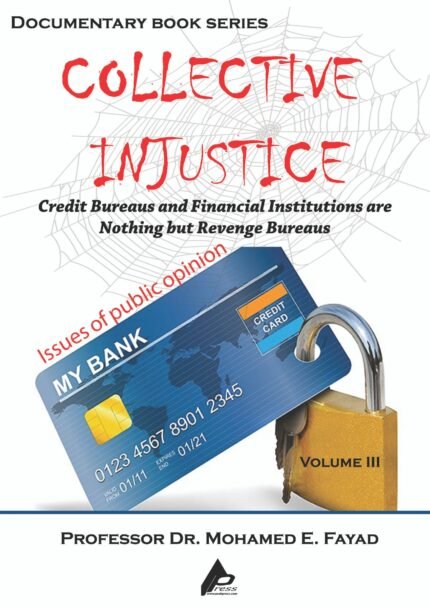

Credit Bureaus and Financial Institutions are nothing but Vindictive Bureaus by Dr. Mohamed E. Fayad
Credit Bureaus and Financial Institutions are nothing but Vindictive Bureaus. I have suffered a lot from the mistreatment of companies, banks, credit bureaus, and Wells Fargo, which I think colluded with the bank I deal with and deliberately destroyed my financial reputation and all my business, which negatively affected all my activities and deprived me of my economic rights by publishing false information about me to all financial institutions and all parties that need a financial report on me. In the last six years, I have compiled a complete record of all credit companies and their offices, due to which I wasted a lot of time contacting all of them on the phone and writing correspondence to them. However, they didn't help me with anything. Moreover, I didn't get any support from them to compensate me for what I suffered, like severe losses and damages, and they unjustly robbed me of money. Please consider these allegations of mine because they are tough. You can check the evidence attached to the book, which includes the latest information about my bank and credit cards and contains many errors and contradictions. I am tired of being rejected and unwarrantedly mistreated by all banks.
Fayad’s Unified Software Engine (FUSE)
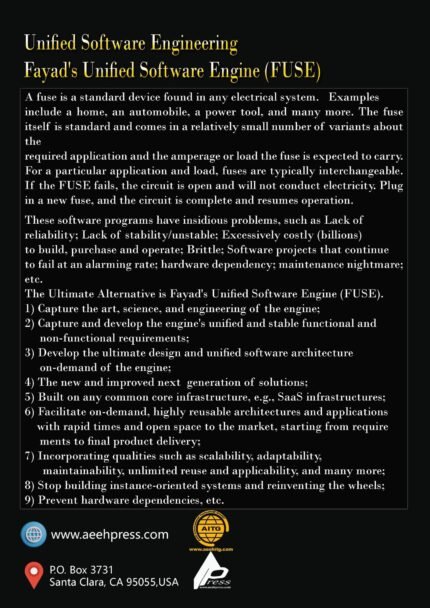
A fuse is a standard device found in any electrical system. Examples include a home, an automobile, a power tool, and many more. The fuse itself is standard and comes in a relatively small number of variants about the required application and the amperage or load the fuse is expected to carry. For a particular application and load, fuses are typically interchangeable. If the FUSE fails, the circuit is open and will not conduct electricity. Plug in a new fuse, and the circuit is complete and resumes operation. These software programs have insidious problems, such as Lack of reliability; Lack of stability/unstable; Excessively costly (billions) to build, purchase and operate; Brittle; Software projects that continue to fail at an alarming rate; hardware dependency; maintenance nightmare; etc. The Ultimate Alternative is Fayad's Unified Software Engine (FUSE). 1) Capture the art, science, and engineering of the engine; 2) Capture and develop the engine's unified and stable functional and non-functional requirements; 3) Develop the ultimate design and unified software architecture on-demand of the engine; 4) The new and improved next generation of solutions; 5) Built on any common core infrastructure, e.g., SaaS infrastructures; 6) Facilitate on-demand, highly reusable architectures and applications with rapid times and open space to the market, starting from require ments to final product delivery; 7) Incorporating qualities such as scalability, adaptability, maintainability, unlimited reuse and applicability, and many more; 8) Stop building instance-oriented systems and reinventing the wheels; 9) Prevent hardware dependencies, etc.
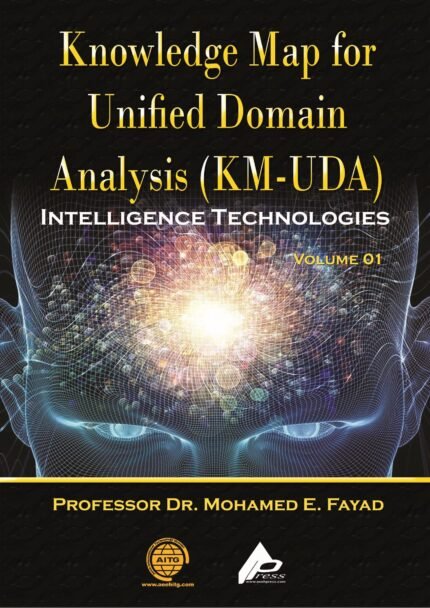
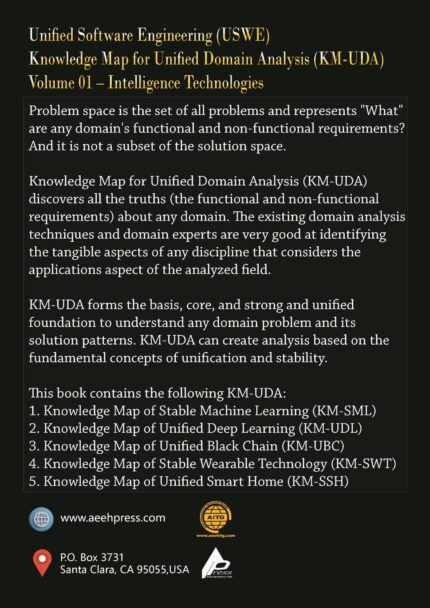
Knowledge Map for Unified Domain Analysis (KM-UDA) Volume 01 – Intelligence Technologies
Problem space is the set of all problems and represents "What" are any domain's functional and non-functional requirements? And it is not a subset of the solution space. Knowledge Map for Unified Domain Analysis (KM-UDA) discovers all the truths (the functional and non-functional requirements) about any domain. The existing domain analysis techniques and domain experts are very good at identifying the tangible aspects of any discipline that considers the applications aspect of the analyzed field. KM-UDA forms the basis, core, and strong and unified foundation to understand any domain problem and its solution patterns. KM-UDA can create analysis based on the fundamental concepts of unification and stability. This book contains the following KM-UDA: 1. Knowledge Map of Stable Machine Learning (KM-SML) 2. Knowledge Map of Unified Deep Learning (KM-UDL) 3. Knowledge Map of Unified Black Chain (KM-UBC) 4. Knowledge Map of Stable Wearable Technology (KM-SWT) 5. Knowledge Map of Unified Smart Home (KM-SSH)
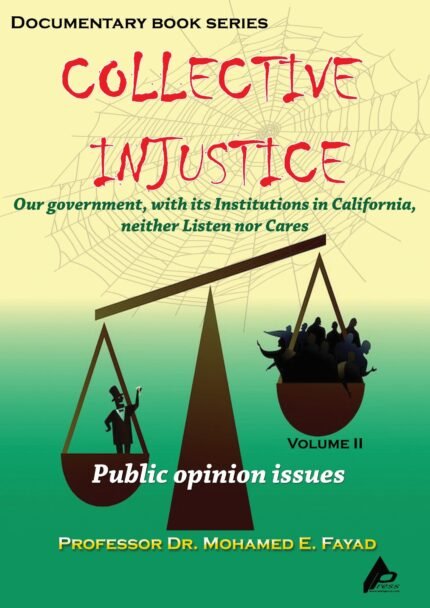

Our California government and its institutions neither Listen nor Care by Dr. M.E. Fayad
For several years, I have been trying hard to ward off collective injustice in my arena the injustice of many people and institutions, which is countless. I found no one to help me except God, Lord of the worlds. So I told myself to approach the government and its institutions, the judiciary, and lawyers, seeking help from all of them. Here, I present to them my petitions, letters, and valid evidence so that I may find among them someone who will be fair to me and remove the yoke of injustice from me. It cost me great effort, precious time, and much money, in addition to burning my nerves and deteriorating my health. My lack of resources hardly covered my daily living needs or my medical and health requirements, which prompted me to drown in many debts that exhausted me. In addition, they mistreated me when I demanded my legal rights in all my transactions and entitlements as an elderly American citizen with special needs, but no one listened or cared. It is the first volume among more than thirty-five volumes, containing between its covers all the evidence of letters and petitions showing fraud against my person, which had a disastrous effect on my work, my health, and my entire life, and my responses to all of that with irrefutable evidence
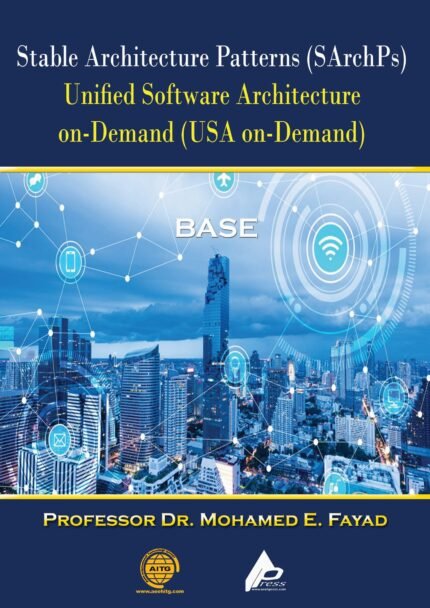
Stable Architecture Patterns (SArchPs) Unified Software Architecture on-Demand (USA on-Demand)
USA on-Demand proposes future trends in "Software Architectures that solve the mentioned challenges above and Look Seriously at "Unified Software Architecture on-Demand (F-USA on-Demand) ." The rapid growth of technology, coupled with the tightened development time and production cost constraints, have imposed tremendous pressure and an intense desire for software enterprises to create new and innovative designs which could respond to rapidly changing business and operating environments. Therefore, enterprises must invest in building stable architectures based on conceptual knowledge more than application context. Any system based on a stable architecture is built in a way that captures the enduring goals that the software is supposed to meet. We refer to these emerging trends of architectures as Architectures on Demand as they are unlimited reusable, adaptable, customizable, extensible, Customizability, self-configurable, self-manageable, and unlimited applicability, according to the future requirements and changes in the operating environments. Adaptability refers to how software system architecture can accommodate changes in its environment constrained by the hardware and software. Customizability refers to the ability of the architecture to be managed and customized by an agent, its users, benefiting applications, and others. Extensibility means that the architecture includes mechanisms for expanding/enhancing the system with new capabilities without making major changes to the architecture and the underlying infrastructure. Good architecture has excellent design principles and guidelines to ensure such architecture's excellency. Self-configurable and self-manageable architectures refer to the architectures of systems that can manage and "self-heal" their properties dynamically at the level of components, connectors, and the underlying infrastructure. The crosscutting concern for all these properties is that dependability should continue to be maintained and evolve the adaptation of the architectures on demand.
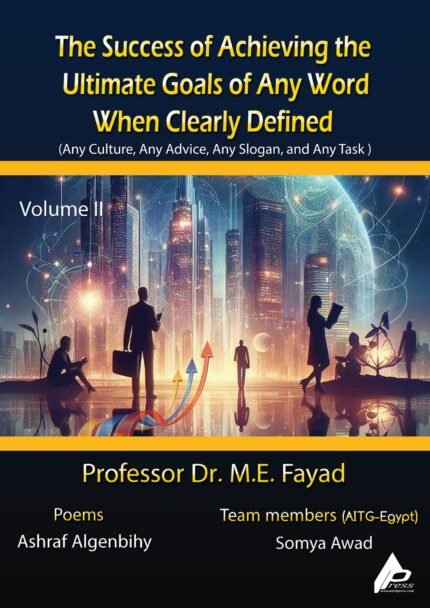
The Success of Achieving the Ultimate Goals of Any Word When Clearly Defined (Any Culture, Any Advice, Any Slogan, and Any Task )
Capabilities (WORDs) are the business-centric workhorses called Business Objects (BOs) that support the realization of fulfillment of a goal where goals (WORDs) are Enduring Business-centric Themes called (EBTs). Goals and capabilities are enduring artifacts, but with a minor difference: They are externally adaptable via hooks that are easily connected to the application objects called Industrial Objects (IOs) The Goals and Capabilities present the problem space, which are stable and unified functional requirements that do not exist in current system development. The “Golden Rule”: Ultimate Goal (UG) is considered to be the first of more than 50 discovery keys and follows the “golden rule”: (1) Most BOs have a unified, Stable, and final goal. (2) A few BOs have two goals. (3) Rare BOs have three goals. This volume shows that the ultimate goals that are discovered of: Any Culture, Any Advice, Any Slogan, and Any Task.

The Success of Achieving the Ultimate Goals of Any Word When Clearly Defined (Any Plan, Any Crime, Any Criteria, and Any Assumption )
Capabilities (WORDs) are the business-centric workhorses called Business Objects (BOs) that support the realization of fulfillment of a goal where goals (WORDs) are Enduring Business-centric Themes called (EBTs). Goals and capabilities are enduring artifacts, but with a minor difference: They are externally adaptable via hooks that are easily connected to the application objects called Industrial Objects (IOs) The Goals and Capabilities present the problem space, which are stable and unified functional requirements that do not exist in current system development. The “Golden Rule”: Ultimate Goal (UG) is considered to be the first of more than 50 discovery keys and follows the “golden rule”: (1) Most BOs have a unified, Stable, and final goal. (2) A few BOs have two goals. (3) Rare BOs have three goals. This volume shows that the ultimate goals that are discovered of: Any Plan, Any Crime, Any Criteria, Any Assumption.

Reviews
There are no reviews yet.