







The Success of Achieving the Ultimate Goals of Any Word When Clearly Defined (Any Skill, Any Performance, Any Reason, and Any Rule)
Price range: $69.59 through $199.59

الطريق إلى النجاح: تحقيق الأهداف النهائية لأي كلمة عند تحديدها
Price range: $29.59 through $49.59
الطريق إلى النجاح: تحقيق الأهداف النهائية لأي كلمة عند تحديدها
Price range: $29.59 through $49.59
Capabilities (WORDs) are the business-centric workhorses called Business Objects (BOs) that support the realization of fulfillment of a goal where goals (WORDs) are Enduring Business-centric Themes called (EBTs). Goals and capabilities are enduring artifacts, but with a minor difference: They are externally adaptable via hooks that are easily connected to the application objects called Industrial Objects (IOs) The Goals and Capabilities present the problem space, which are stable and unified functional requirements that do not exist in current system development. The “Golden Rule”: Ultimate Goal (UG) is considered to be the first of more than 50 discovery keys and follows the “golden rule”: (1) Most BOs have a unified, Stable, and final goal. (2) A few BOs have two goals. (3) Rare BOs have three goals. This volume shows that the ultimate goals that are discovered of: Any Project, Any Proposal, Any Strategy, and Any Debate.
| BOOK | Hardcover, Paperback, Kindle |
|---|
Description
Product details
- Publisher : AEEH PRESS INC (April 13, 2024)
- Language : English
- Paperback : 255 pages
- ISBN-13 :978-1-964282-20-6
- Item Weight : 1.14 pounds
- Dimensions : 6 x 0.68 x 9 inches
-
AITG Egypt Members Naglaa Bakr- Medhat Shanan- Somya Awad
- Poems Ashraf Algenbihy
- Illustrations by Mahmoud Asaad
- Calligrapher and language editor Kamal Saad
Book flyers
Copyright © 2025 AEEH PRESS INC
All Rights Reserved. No part of this publication may be reproduced, stored in a retrieval system, or transmitted, in any form or by any means, electronic, mechanical, photocopying, recording, or otherwise, without the written permission of the author.
Reviews (0)
Only logged in customers who have purchased this product may leave a review.
Shipping & Delivery


Related products
Fayad’s The Art of Abstraction (FAA)
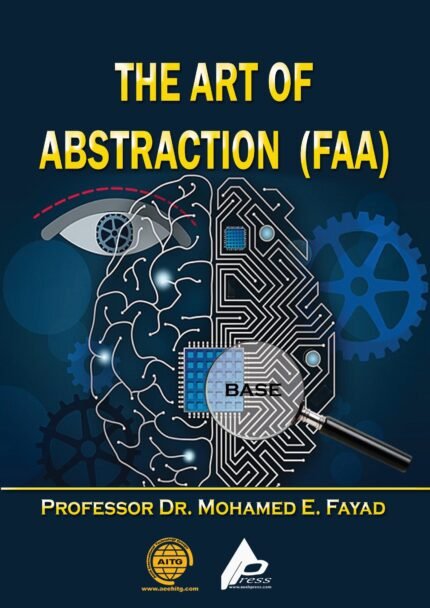
Every field of knowledge depends on ABSTRACTIONS. We could do better on the abstraction process and the type of abstractions because it is based mainly on tangibility and ignores other, more essential abstractions. This Book is based on a great verse in the Quran" And taught Adam all the names" (The Qur'an, Sura Al Baqara:30 to 37). The art of abstraction is looking at every concept (Noun and Noun Phrase) within the dictionary of natural language (the way that will be used and utilized in the future for all our systems) as a unique system in a way that every concept has an extraordinary discovery that includes functional requirements, non-functional requirements, stable and Unified design, contexts, challenges, constraints, applicability, measure-ability, and others. Each concept can be documented in 3, 6, 20, 60, or 900+ pages. The Book has a few dictionaries called the art of Abstraction and Unification, discoveries of Stable and Unified: Intelligent Systems, Machine Learning & Standards, Business, Big Data, Deep Learning. This art of abstraction and unification discoveries have unlimited advantages: 1. Understand and appreciate our natural languages 2. The future of technology depends on these discoveries. 3. Unification of domain analysis of any field of knowledge 4. Know how to generate stable and unified requirements and the ultimate design of any system. 5. Knowledge Unification 7. Limit and control maintenance problems 8. Explore and create a massive number of new systems 9. Generate better methodologies for developing unified and stable systems 10. Stop re-inventing the wheels 11. Develop self-manageable, self-adaptable, self, extendable, and self-configurable systems with unlimited applicability and reuse. 12. Appreciate and have a deep understanding of the holey books 13. A peak of how the future looks like. And many more.

Knowledge Map for Unified Domain Analysis (KM-UDA) Volume 02 – Software Lifecycle Stages
Problem space is the set of all problems and represents "What" are any domain's functional and non-functional requirements? And it is not a subset of the solution space. Knowledge Map for Unified Domain Analysis (KM-UDA) discovers all the truths (the functional and non-functional requirements) about any domain. The existing domain analysis techniques and domain experts are very good at identifying the tangible aspects of any discipline that considers the applications aspect of the analyzed field. KM-UDA forms the basis, core, and strong and unified foundation to understand any domain problem and its solution patterns. KM-UDA can create an analysis based on the fundamental concepts of unification and stability. This book contains the following KM-UDA: 1. Knowledge Map of Unified Functional Requirements (KM-UFRs) or Problem Space Stable Analysis Patterns (PS-SAPs) 2. Knowledge Map of Unified Non-Functional Requirements (KM-UNFs) or Quality Factors Stable Analysis Patterns (QF-SAPs) 3. Knowledge Map of Stable Software/System Design (KM-SDPs) 4. Knowledge Map of Unified Software Architecture on Demand (KM-USA on-Demand) 5. Knowledge Map of Unified Software Testing or Software Immune Testing: Unified Software Engine (SIT-USE)
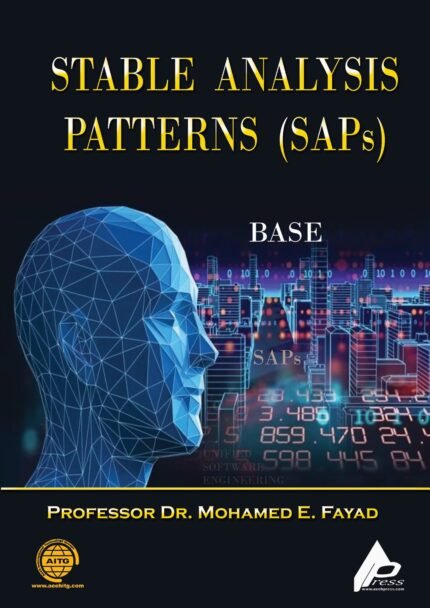
Stable Analysis Patterns (SAPs) (BASE)
Software analysis patterns (SAPs) represent the enduring business themes (EBTs) concepts, show functional and non-functional requirements, ultimate design, and applicability, and play an essential role in reducing the overall cost and compressing the time of software project lifecycles. However, building stable analysis patterns is still a significant and delicate challenge. This Book proposes the novel concept of SAPs based on software stability as a modern approach for creating long-lasting, highly reusable, and widely applicable analysis patterns. This Book also aims to promote a better understanding of the problem space and discusses how to focus on requirements analysis accurately. Further, it demonstrates a new approach to discovering and creating stable analysis patterns (SAPs). A pragmatic approach is presented for understanding the problem domains, utilizing SAPs for any field of knowledge, and modeling the stable and unified foundation of EBTs, reusable components, and engines. It will help the readers attain the basic knowledge to analyze and extract analysis patterns from any domain of interest. Readers will also learn to master methods to document practices effectively, efficiently, and comprehensibly. The Book Brings significant contributions to the field of computing. This Book is a unique blend and a comprehensive reference manual on the topic of SAPs.

Stable Architecture Patterns (SArchPs) Unified Software Architecture on-Demand (USA on-Demand)
USA on-Demand proposes future trends in "Software Architectures that solve the mentioned challenges above and Look Seriously at "Unified Software Architecture on-Demand (F-USA on-Demand) ." The rapid growth of technology, coupled with the tightened development time and production cost constraints, have imposed tremendous pressure and an intense desire for software enterprises to create new and innovative designs which could respond to rapidly changing business and operating environments. Therefore, enterprises must invest in building stable architectures based on conceptual knowledge more than application context. Any system based on a stable architecture is built in a way that captures the enduring goals that the software is supposed to meet. We refer to these emerging trends of architectures as Architectures on Demand as they are unlimited reusable, adaptable, customizable, extensible, Customizability, self-configurable, self-manageable, and unlimited applicability, according to the future requirements and changes in the operating environments. Adaptability refers to how software system architecture can accommodate changes in its environment constrained by the hardware and software. Customizability refers to the ability of the architecture to be managed and customized by an agent, its users, benefiting applications, and others. Extensibility means that the architecture includes mechanisms for expanding/enhancing the system with new capabilities without making major changes to the architecture and the underlying infrastructure. Good architecture has excellent design principles and guidelines to ensure such architecture's excellency. Self-configurable and self-manageable architectures refer to the architectures of systems that can manage and "self-heal" their properties dynamically at the level of components, connectors, and the underlying infrastructure. The crosscutting concern for all these properties is that dependability should continue to be maintained and evolve the adaptation of the architectures on demand.

Stable Design Patterns (SDPs)(BASE)
Stable Design Patterns (SDPs) represent Business Objects (BOs) Concepts, provide a proper understanding of the problem (functional and non- functional requirements) and solution spaces (ultimate design), and show that a formation approach to creating stable design patterns (SDPs), and applicability accords with Alexander’s current understanding of architectural patterns. This book examines SDPs concerning the following five central themes: 1. What are the unique roles of SDPs for BOs in modeling proper understanding and developing the problem (functional and non-functional requirements) and the accurate solution (ultimate design) of BO? 2. How do we achieve software unification and stability over time and design SDPs that are effective to use? 3. What is the most efficient way to document SDPs to ensure efficient reusability? The book is an extension to the contemporary templates used in recording SDPs. 4. A pragmatic approach is presented for understanding the problem domains, utilizing SDPs for any field of knowledge, and modeling the stable and unified foundation of BOs, reusable components, and engines. 5. SDPs present a fresh approach for creating self-adaptable, self- customizable, easily extensible, personalize-able, self-configurable, and self-manageable design patterns that meet future requirements and changes in the operating environments.


The Brutality of Tyrants – First Volume by Dr. M.E. Fayad,
In The Brutality of Tyrants, Dr. Mohamed Fayad recounts his journey through systemic injustice, racism, and corruption that profoundly impacted both his personal and professional life. His story extends beyond individual experiences, revealing public issues affecting millions of American citizens today. Dr. Fayad’s experiences within academia, healthcare, and financial institutions illustrate how individuals and systems have not only marginalized him but continue to suppress countless others. Facing deliberate negligence, exclusion, and even threats to his life, Dr. Fayad’s narrative highlights the devastating impact of institutional oppression on everyday citizens. This book is not intended to offend any person, institution, group, political party, government, or country. Rather, it is Dr. Fayad’s means of reporting his own experiences, with the hope that recounting these injustices will prevent them from happening to others. His account critiques the failure of justice in America, particularly for marginalized individuals, and underscores the urgent need for reforms across multiple sectors within the nation. The Brutality of Tyrants serves as both a personal memoir and a broader critique of institutional oppression, issuing a strong call for accountability and change in what Dr. Fayad describes as one of the greatest nations on Earth. Through his narrative, he urges readers to confront the corruption and inequality that persist in America, hoping to inspire a collective push toward a fairer, more transparent system for all.
Unified Business Rules Standard (UBRS)
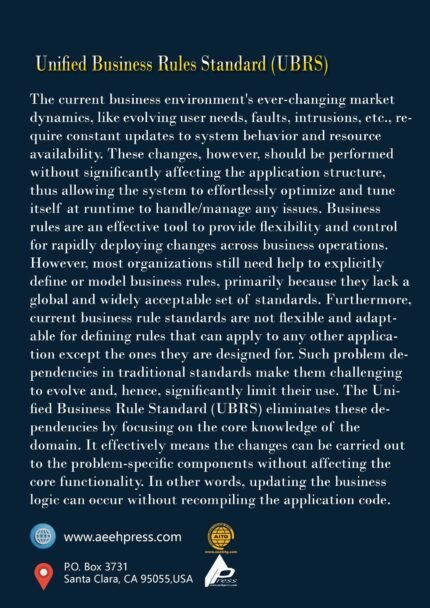
The current business environment's ever-changing market dynamics, like evolving user needs, faults, intrusions, etc., require constant updates to system behavior and resource availability. These changes, however, should be performed without significantly affecting the application structure, thus allowing the system to effortlessly optimize and tune itself at runtime to handle/manage any issues. Business rules are an effective tool to provide flexibility and control for rapidly deploying changes across business operations. However, most organizations still need help to explicitly define or model business rules, primarily because they lack a global and widely acceptable set of standards. Furthermore, current business rule standards are not flexible and adaptable for defining rules that can apply to any other application except the ones they are designed for. Such problem dependencies in traditional standards make them challenging to evolve and, hence, significantly limit their use. The Unified Business Rule Standard (UBRS) eliminates these dependencies by focusing on the core knowledge of the domain. It effectively means the changes can be carried out to the problem-specific components without affecting the core functionality. In other words, updating the business logic can occur without recompiling the application code.


الطريق إلى النجاح: تحقيق الأهداف النهائية لأي كلمة عند تحديدها
Capabilities (WORDs) are the business-centric workhorses called Business Objects (BOs) that support the realization of fulfillment of a goal where goals (WORDs) are Enduring Business-centric Themes called (EBTs). Goals and capabilities are enduring artifacts, but with a minor difference: They are externally adaptable via hooks that are easily connected to the application objects called Industrial Objects (IOs) The Goals and Capabilities present the problem space, which are stable and unified functional requirements that do not exist in current system development. The “Golden Rule”: Ultimate Goal (UG) is considered to be the first of more than 50 discovery keys and follows the “golden rule”: (1) Most BOs have a unified, Stable, and final goal. (2) A few BOs have two goals. (3) Rare BOs have three goals. This volume shows that the ultimate goals that are discovered of: Any Culture, Any Advice, Any Slogan, and Any Task.
Reviews
There are no reviews yet.