

INTERNATIONAL PRESS RELEASE
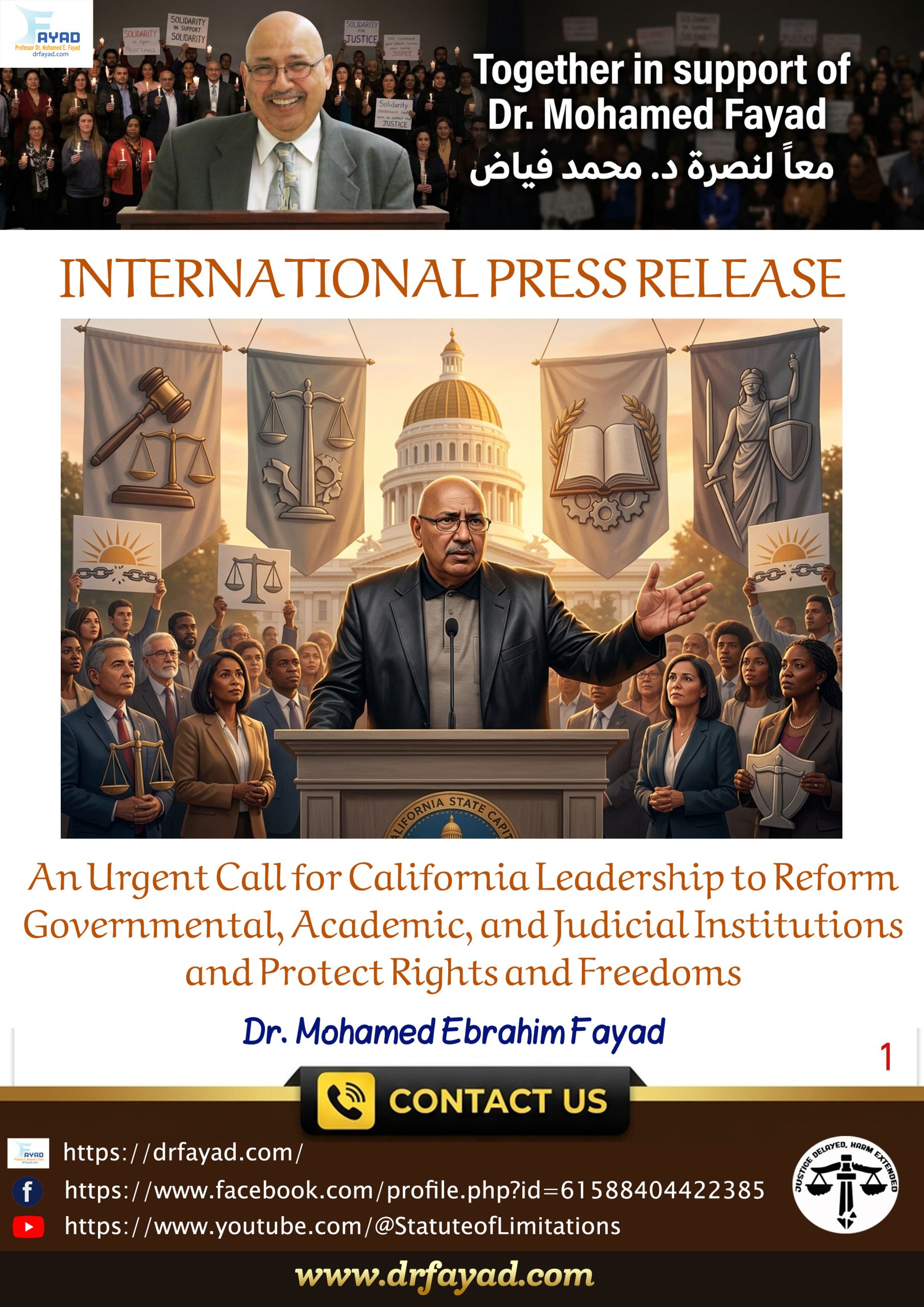
INTERNATIONAL PRESS RELEASE
An Urgent Call for California Leadership to Reform Governmental, Academic, and Judicial Institutions and Protect Rights and Freedoms
The Case of Dr. Mohamed Ebrahim Fayad Raises Serious Questions About Institutional Accountability, Discrimination, Access to Justice, and Independent Legal Representation
SAN JOSE, CALIFORNIA – NOVEMBER 10, 2026
In an urgent appeal to Mr. Xavier Becerra, Governor-Elect of California, the case of Dr. Mohamed Ebrahim Fayad, an Egyptian-American university professor, is presented as an example warranting broad institutional attention to the challenges individuals may face when academic, legal, administrative, healthcare, financial, and living-related disputes become entangled with multiple public and private institutions.
This appeal comes at a time when there is an increasing need to strengthen transparency and accountability, ensure equality under the law, safeguard institutional independence, and provide meaningful opportunities for individuals who have suffered harm to obtain justice and independent legal representation.
Dr. Fayad is a former tenured full professor who alleges that he was wrongfully terminated from his position at San José State University (SJSU). He specializes in Computer Engineering, Computer Science, and Software Engineering and is a scientist, author, and innovator. He has spent more than fifty years in the United States pursuing education, professional work, scientific research, knowledge creation, and community service. His academic and research record includes hundreds of scholarly publications, books, and scientific contributions.
Nevertheless, Dr. Fayad maintains that his professional career has been subjected, over a succession of years, to a series of disputes and obstacles that have severely affected his academic work, financial and professional rights, and ability to continue his scientific contributions, with consequences extending into other aspects of his life.
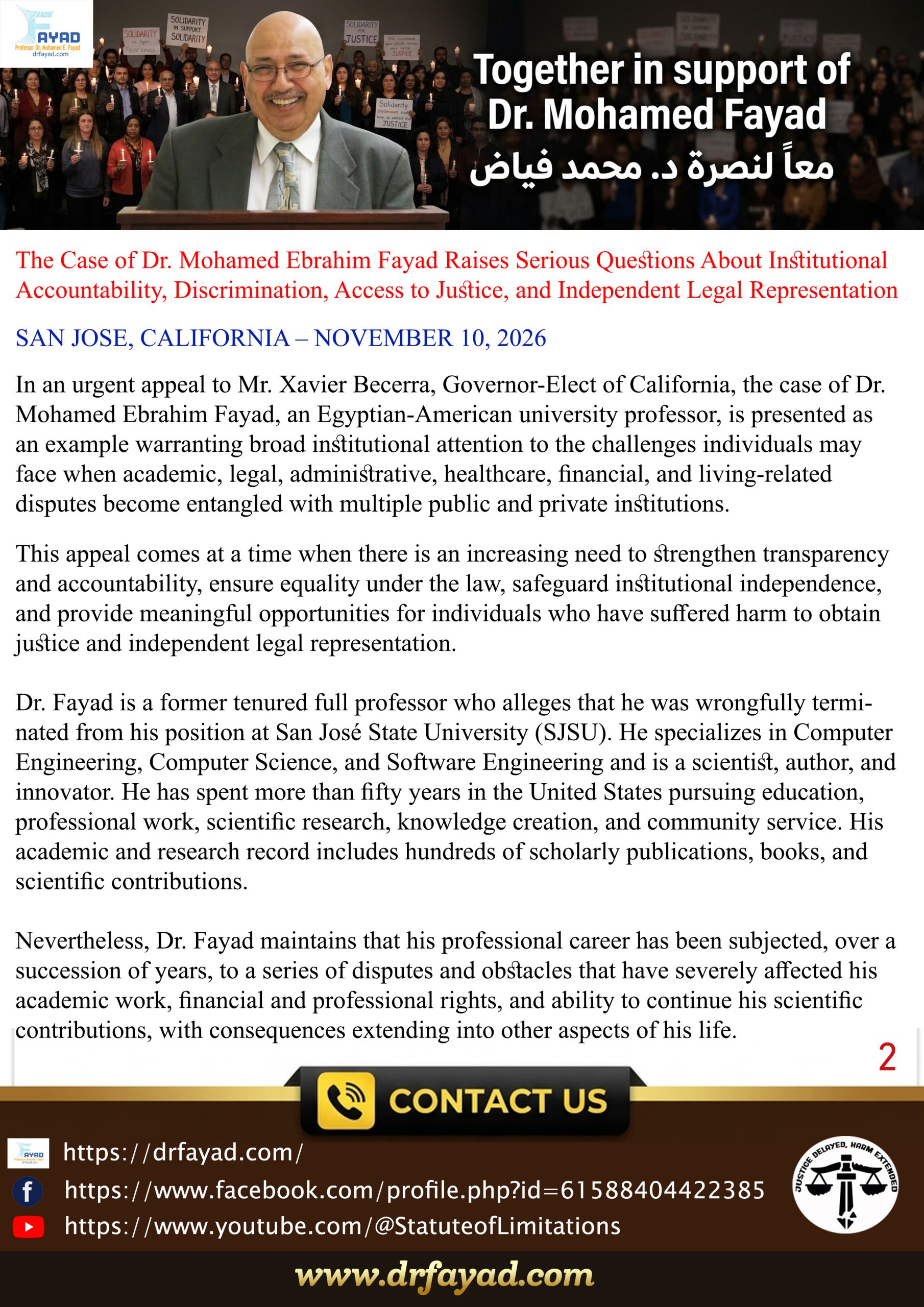
PUBLIC UNIVERSITIES: THE NEED FOR REFORM AND AN END TO ADMINISTRATIVE AND ACADEMIC MISCONDUCT
Dr. Fayad’s dispute with San José State University is at the center of this case, following a termination decision dated March 6, 2025, which took effect on March 19, 2025, and the subsequent objections and complaints concerning the procedures, stated grounds, and circumstances surrounding that decision.
The matters he is calling for independent attention include what he describes as discrimination and employment retaliation, the reduction of his academic standing, the failure to provide appropriate accommodations for his health circumstances, the handling of his research and teaching requests, and the removal of his academic profile, professional records, and digital materials associated with the university over approximately 25 years.
He also raises concerns about administrative expansion and excessive bureaucracy within public universities, the imbalance between the number of administrators and faculty members, and whether public university budgets are being directed toward education and scientific research rather than the expansion of administrative structures.
He calls for a reassessment of university management practices, transparency in hiring, termination, promotion, and compensation procedures, and effective protections for professors and researchers against abuse of authority, discrimination, and institutional retaliation.
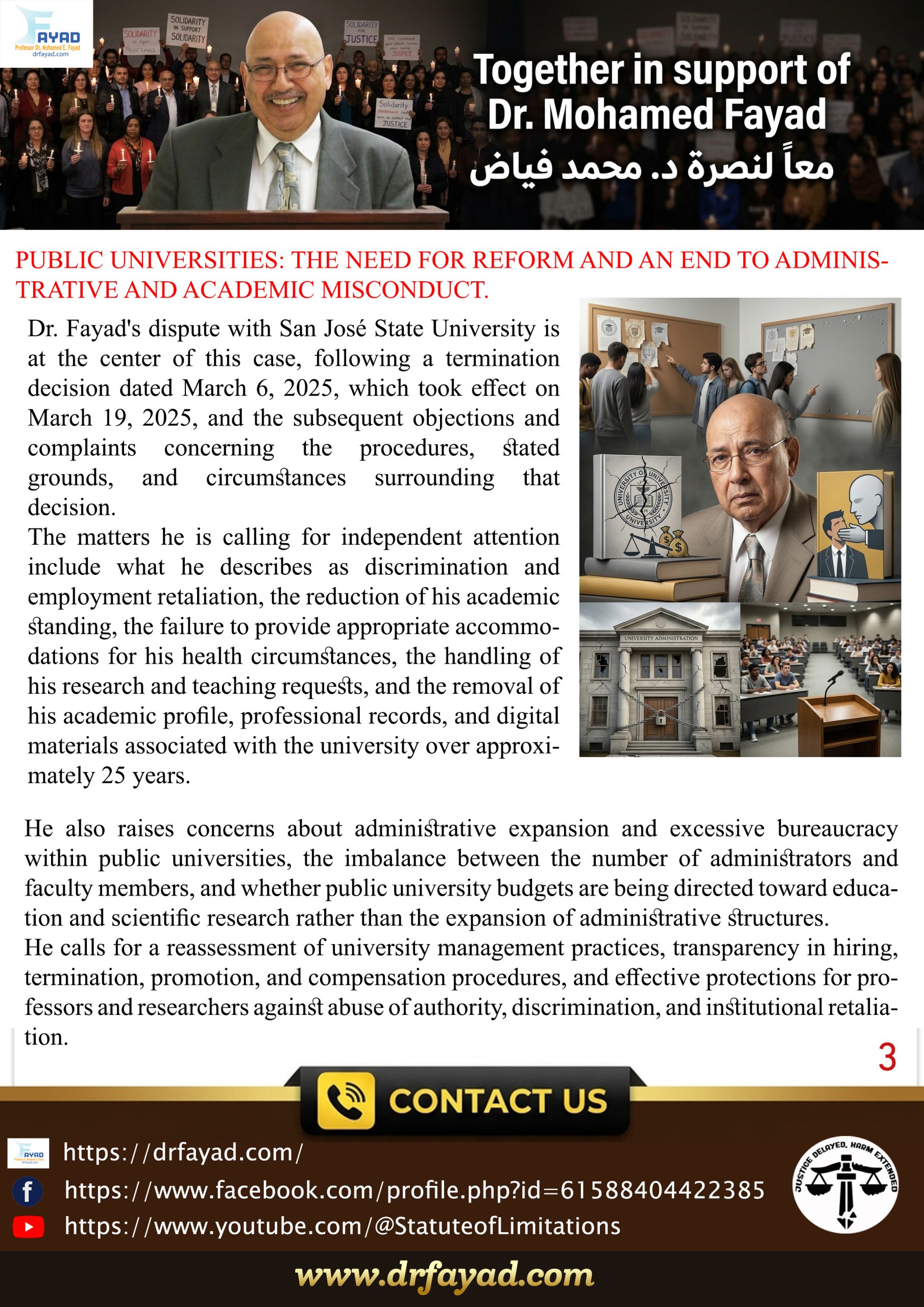
COURTS AND THE JUDICIARY: HAS ACCESS TO JUSTICE BECOME EXTREMELY DIFFICULT?
This appeal also addresses the justice system, where Dr. Fayad raises concerns about multiple disputes and legal proceedings, delays in obtaining relief, and the difficulties he has encountered in securing effective and independent legal representation.
He reports that he has contacted more than 200 attorneys and law firms in an effort to obtain legal representation for his principal cases, yet he has not been able to secure the representation he needs.
This experience raises important questions about the ability of individuals—particularly older adults and those facing serious health and financial challenges—to pursue claims against large institutions with substantial legal and financial resources.
This appeal is not intended to make blanket accusations against judges or attorneys, nor to interfere with judicial independence. Rather, it calls for institutional safeguards that ensure equal access to justice, the right to pursue legal claims, procedural transparency, and the ability to obtain qualified legal counsel without financial resources or personal background becoming barriers to justice.
DISCRIMINATION, RACIAL BIAS, AND MEDIA AND DIGITAL EXCLUSION
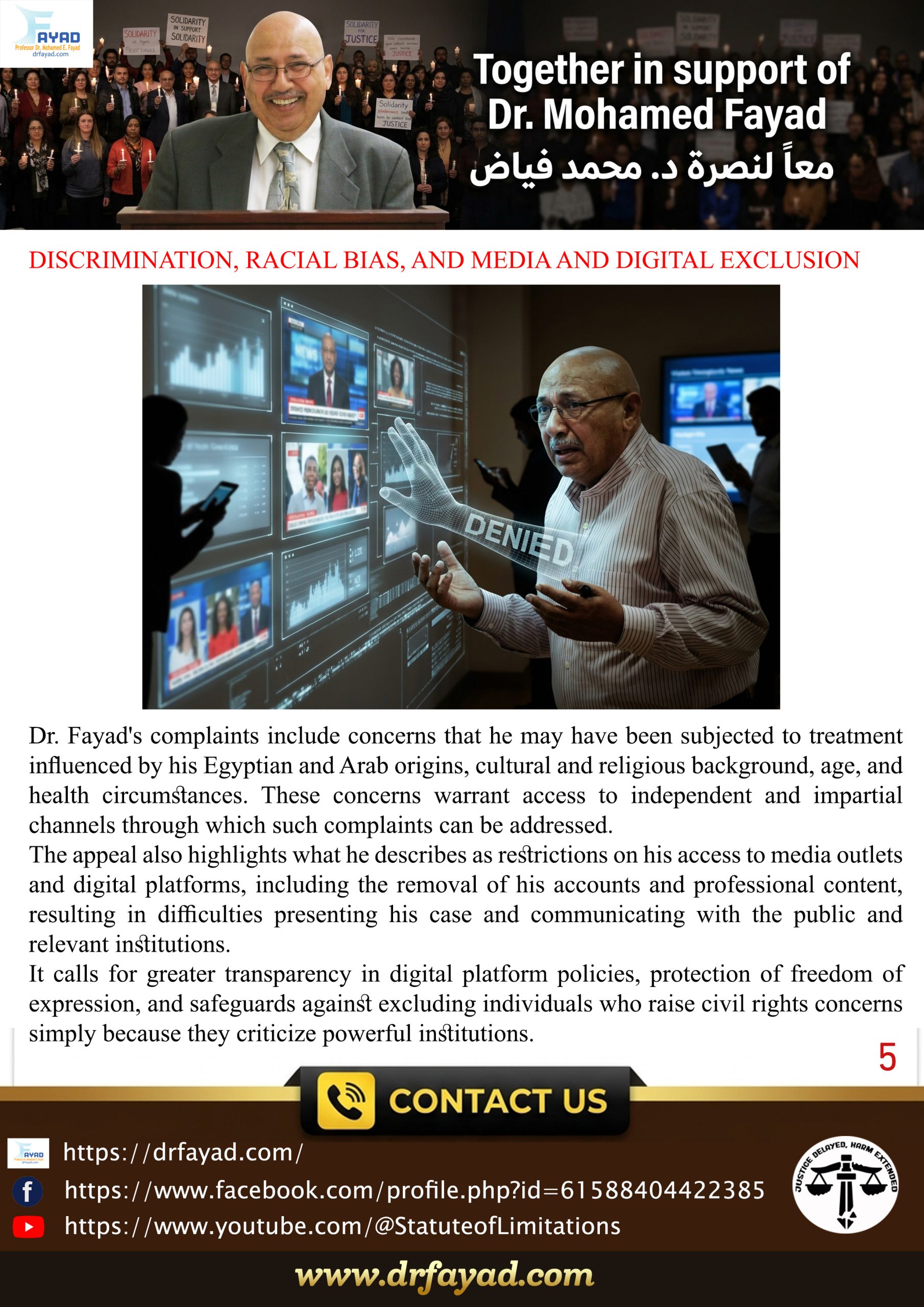
Dr. Fayad’s complaints include concerns that he may have been subjected to treatment influenced by his Egyptian and Arab origins, cultural and religious background, age, and health circumstances. These concerns warrant access to independent and impartial channels through which such complaints can be addressed.
The appeal also highlights what he describes as restrictions on his access to media outlets and digital platforms, including the removal of his accounts and professional content, resulting in difficulties presenting his case and communicating with the public and relevant institutions.
It calls for greater transparency in digital platform policies, protection of freedom of expression, and safeguards against excluding individuals who raise civil rights concerns simply because they criticize powerful institutions.
HEALTHCARE, BANKING, AND HOUSING: THE EXTENSION OF HARM INTO FUNDAMENTAL RIGHTS
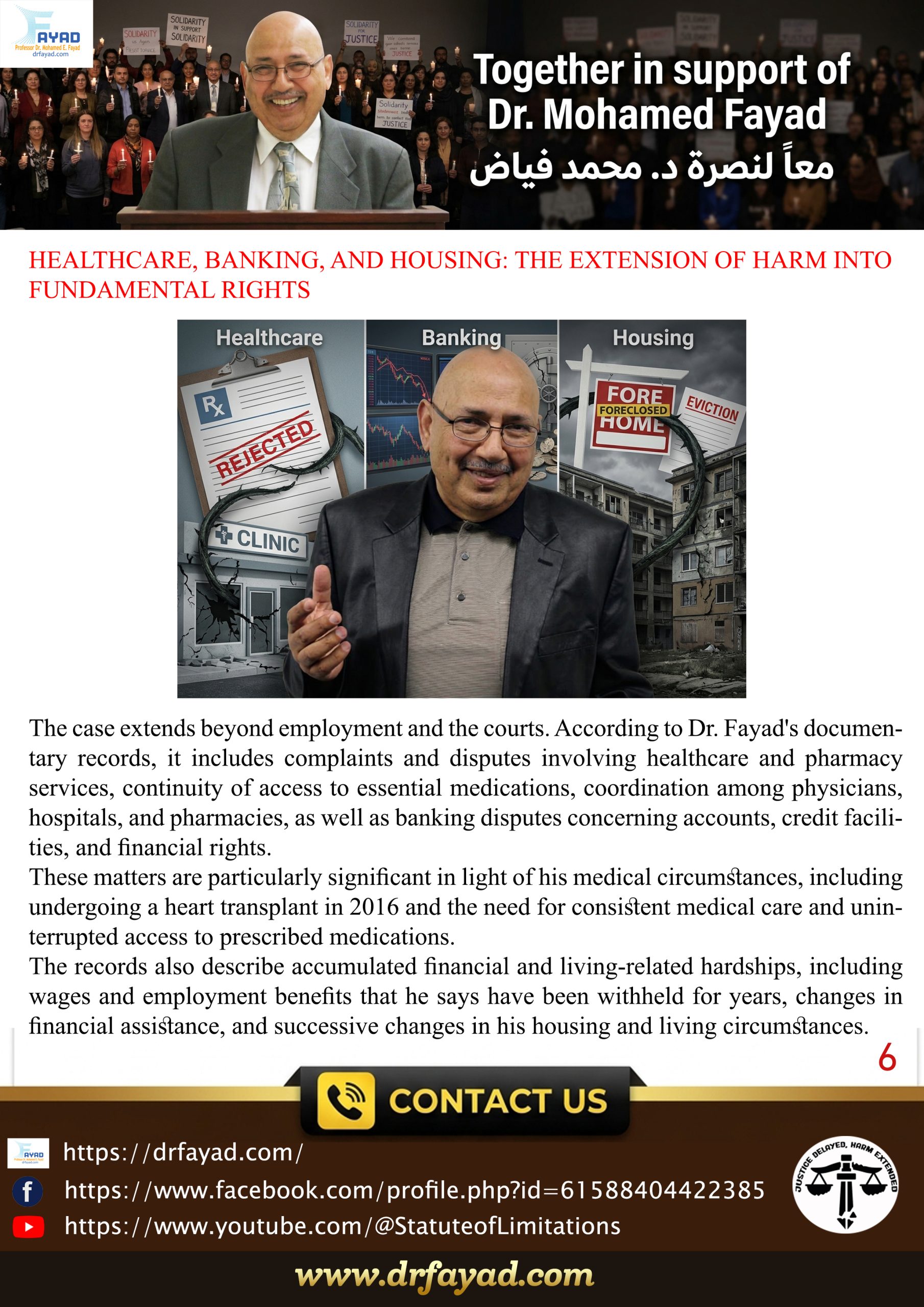
The case extends beyond employment and the courts. According to Dr. Fayad’s documentary records, it includes complaints and disputes involving healthcare and pharmacy services, continuity of access to essential medications, coordination among physicians, hospitals, and pharmacies, as well as banking disputes concerning accounts, credit facilities, and financial rights.
These matters are particularly significant in light of his medical circumstances, including undergoing a heart transplant in 2016 and the need for consistent medical care and uninterrupted access to prescribed medications.
The records also describe accumulated financial and living-related hardships, including wages and employment benefits that he says have been withheld for years, changes in financial assistance, and successive changes in his housing and living circumstances.
URGENT DEMANDS FOR INSTITUTIONAL REFORM AND THE PROTECTION OF CITIZENS
This appeal calls upon California’s leadership and the relevant legislative and oversight authorities to take practical steps, including:
Establishing independent and effective institutional accountability mechanisms for public universities and government agencies.
Expanding access to independent legal representation, including free or low-cost legal services for individuals facing complex legal disputes.
Ensuring fairness and integrity in hiring, termination, and promotion procedures while protecting academic rights.
Strengthening transparency and accountability in judicial and administrative institutions while fully respecting judicial independence.
Combating discrimination based on national origin, religion, age, or disability.
Protecting patients’ rights and ensuring continuity of access to medications and healthcare services.
Strengthening oversight of financial institutions and protecting customers’ economic rights.
Protecting freedom of expression and ensuring transparency in media organizations and digital platforms.
Developing expedited relief mechanisms to prevent harm from escalating as a result of prolonged proceedings.
Establishing an official and impartial channel to receive Dr. Mohamed Ebrahim Fayad’s documentary case file and assist him in obtaining independent, pro bono legal representation.